

Key Takeaways
Protecting the lifespan and performance of your PEX pipes is easier—and more rewarding—when you know the best strategies. Follow these expert, Seattle-tested tips to maximize durability, minimize maintenance headaches, and keep your plumbing investment safe for decades.
- Regular maintenance extends PEX lifespan—expect 40-50+ years by combining annual checkups, quarterly pressure tests, and water quality monitoring for trouble-free plumbing.
- Shield pipes from sunlight and extreme temps by using insulation, UV-resistant paint, and proper placement—even brief UV exposure or winter freezes can cut PEX life by years.
- Manage water quality proactively—test for chlorine (<2–4 ppm), pH (6.5–8.5), and hardness annually, since poor water chemistry can reduce lifespan by up to 20 years.
- Document every inspection and service—maintaining a clear record is essential for protecting your 25-year warranty and ensuring rapid support if issues arise.
- Upgrade for extra protection with pressure-regulating valves, smart leak detectors, and water filtration—small investments now prevent costly repairs later.
- Act fast on warning signs—if you spot discoloration, odd water taste, damp patches, or pressure drops, contact a certified Seattle specialist immediately to avoid bigger problems.
- Partner with certified pros for peace of mind—Express Repiping offers free quotes, transparent pricing, and comprehensive support, keeping your home or business plumbing covered for decades.
- Blend smart technology with expertise—use app reminders, sensors, and annual inspections to future-proof your system and keep your pipes—and property—running smoothly year-round.
By applying these strategies, you ensure your PEX pipes last a lifetime—explore the full article for a complete roadmap to stress-free plumbing in Seattle.
Introduction
Imagine turning on your faucet one morning and finding crystal-clear water at perfect pressure—year after year—without a single leak or plumbing surprise.
That’s the promise of properly maintained PEX pipes, now the preferred choice for long-lasting plumbing pipes in many Seattle-area homes and businesses. With proper PEX pipe maintenance, you can ensure a durable, efficient, and trouble-free plumbing system. With proper PEX pipe maintenance, you can ensure a durable, efficient, and trouble-free plumbing system..
But here’s a reality check: even the most advanced piping can lose decades of its expected lifespan from just one small oversight—like skipped inspections, hidden UV exposure, or changes in Seattle’s unique water chemistry.
It’s not just about avoiding costly repairs; it’s about protecting your property value, your time, and your peace of mind with every step you take.
When you understand exactly how to care for your PEX system, you unlock major benefits:
- Stronger resistance against leaks, bursts, and corrosion
- Lower risk of water damage or sudden repair bills
- A valid 25-year warranty backed by certified local experts
- Knowledge to spot early issues—before they become emergencies
- Confidence knowing your plumbing is future-proofed against Seattle’s weather and water quirks
A proactive approach isn’t about doing more work—it’s about making smart moves now so you never have to worry about your plumbing later.
Express Repiping‘s proven maintenance strategies are designed to be simple, quick, and cost-effective, no matter the age or size of your property.
The best part? You don’t need to be a plumbing expert to succeed. With the right tips and resources, you’ll be empowered to keep your PEX system running strong and your warranty ironclad.
Ready to make the most of your investment—and find out just how low-stress “lifetime plumbing” can be?
Next up: discover exactly how long PEX lasts in real-world Seattle conditions—and what you can do today to keep your system trouble-free for decades.
Understanding the Lifespan and Performance Limits of PEX Pipes
PEX pipes are engineered for durability, providing long-lasting pipes that can last 40-50 years or more—this is achievable with regular PEX pipe maintenance. Unlike traditional materials like copper or galvanized steel, durable piping solutions like PEX offer superior flexibility and resilience under challenging water conditions. If you’re considering PEX repiping, learn more about why it’s a beneficial and affordable idea in our PEX Repiping Blog Post.
Unlike older materials such as CPVC (20-30 years), copper (40-70 years with corrosion risk), or galvanized steel (20-50 years and rust-prone), PEX offers unmatched flexibility and resilience under Seattle’s demanding water conditions.
Picture this: Your plumbing system delivering clean, steady water for decades without corroded joints or yearly leaks—a huge upgrade for Seattle homes built before the 1980s.
For more general information about how PEX piping works and how it compares to other plumbing materials, see the PEX overview from the Plastics Pipe Institute (PPI).
What Impacts How Long PEX Really Lasts?
The true lifetime of your long-lasting plumbing pipes depends on several critical factors, such as water quality, UV exposure, and temperature fluctuations. When properly maintained, PEX pipes can offer durable piping solutions that stand the test of time.
- Water Quality: Excess chlorine, high hardness, and unbalanced pH can shave 10–20 years off a PEX system’s longevity. Seattle’s water is generally soft but may have higher chloramines in some zones.
- UV Exposure: Even brief sun exposure can degrade PEX in as little as 2-3 years. Basements and crawlspaces offer natural protection, but any exposed runs must be covered or painted.
- Chemical & Rodent Contact: Common household cleaners, pesticides, or pests like rats can compromise pipe integrity.
- Temperature Fluctuations: Sustained temperatures above 160°F rapidly accelerate PEX aging—regularly check your water heater settings.
The Power of Expert, Local Installation
Choosing a certified, locally experienced crew is essential for maximizing the lifespan of your long-lasting pipes and ensuring the best performance from your durable piping solutions.
Express Repiping’s team delivers:
- Code-compliant, stress-free installations—no kinks, sharp bends, or overtightened fittings
- 25-year warranty coverage as standard, giving you real peace of mind
- In-depth knowledge of Seattle’s water chemistry, building styles, and climate threats so every system is customized for long life
Key Takeaways for Pipe Longevity
- Expect 40–50+ years from your PEX pipes—for most, that’s a long-lasting plumbing solution that requires minimal maintenance with the right care.
- Routine inspection, smart temperature and water quality management are non-negotiable for lasting results.
- Professional installation (and ongoing support) is the difference between high performance and early failure.
If your goal is “install once and forget about it,” PEX is your best bet—especially with a local expert guiding the process and warranty.
Establishing a Preventative Maintenance Routine
Regular PEX pipe maintenance is the single best way to protect your long-lasting pipes in Seattle and ensure the longevity of your durable piping solutions.
With a thoughtful routine, you’ll extend pipe lifespan, improve water flow, and reduce the risk of hidden leaks catching you off guard. For more information on how to implement a preventive maintenance plan, check out our Preventive Maintenance Blog.
Proactive care isn’t just a suggestion—it’s a proven strategy to prevent costly plumbing emergencies.
Set Your Maintenance Schedule for Success
Picture this: it’s January, and you’re reviewing your simple PEX maintenance calendar.
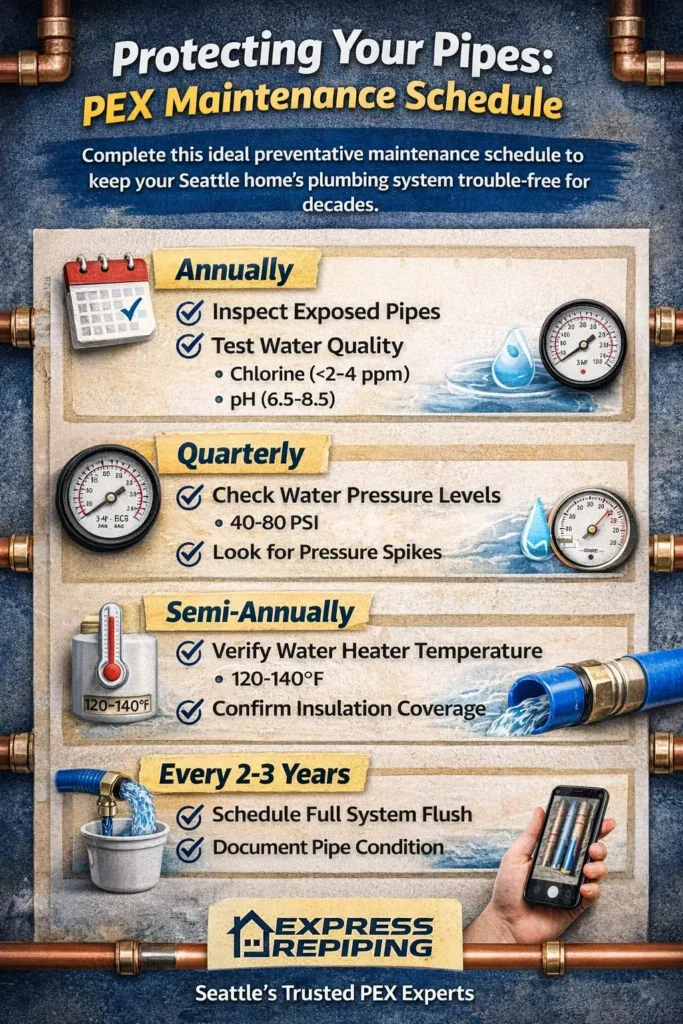
A customized routine keeps you on track without guesswork. Here’s an ideal schedule for Seattle homes and businesses:
- Annually:
- Inspect exposed pipes
- Test water quality (chlorine, pH, hardness)
- Quarterly:
- Check water pressure levels
- Look for pressure spikes
- Semi-annually:
- Verify water heater temperature (stay in the 120-140°F range)
- Confirm insulation coverage on pipes
- Every 2-3 years:
- Schedule a full system flush to clear sediment
Document pipe condition with photos and notes every time—this creates a living record for your plumbing.
Know When to DIY and When to Call a Pro
DIY checks help catch visible issues early, but professional inspections see beyond surface problems—especially in hard-to-reach spots.
- DIY:
- Visual scans for cracks, scratches, discoloration, or signs of rodent damage
- Simple pressure readings with a gauge
- Express Repiping’s Certified Technicians:
- In-depth leaks and stress inspections
- Water chemistry testing
- Pipe lifespan assessments
“If you spot a sudden change in water taste, pressure, or color, a licensed Seattle specialist can save you from major headaches down the road.”
Essential Activities: Step-by-Step
A strong routine covers these critical tasks:
- Visual Inspections:
Check for cracks, scratching, discoloration, or possible rodent gnawing. Early detection means easier repairs.
- Pressure Checks:
Confirm standard 40–60 PSI. If your reading jumps above 80 PSI, install a pressure-reducing valve or water hammer arrestor.
- Temperature Verification:
Make sure the heater isn’t exceeding 140°F—excessive heat (above 160°F) can cut pipe life short.
- System Flushing:
Every 2–3 years, use a hose and bucket at a drain point to push out any built-up sediment.
- Water Quality Testing:
Annually test for chlorine (<2-4 ppm), pH (6.5–8.5), and hardness; if levels are off, use a filter system.
“Your PEX pipes can last 40-50 years—if you protect them from pressure surges, chemical stress, and temperature extremes.”
Mapping out routine tasks—then following through with easy documentation—gives you constant confidence in your plumbing and keeps your warranty strong for decades.
Protecting PEX Pipes from Environmental Threats
Keeping your long-lasting plumbing pipes safe from environmental threats is crucial for maintaining their durability. By shielding your PEX pipes from UV exposure and temperature fluctuations, you can ensure these durable piping solutions provide service for decades.
Even the most durable PEX can fail quickly if exposed to harsh conditions, so a few simple protections can make all the difference.
Shielding Against UV Light: A Must in Seattle Homes
Direct sunlight is the enemy of PEX. Exposed pipes can begin breaking down in as little as 2-3 years after UV exposure, even indoors near windows or bare bulb lights.
- Always cover exposed pipes with insulation, drywall, or by rerouting them out of the light.
- For unfinished basements or crawl spaces, use UV-resistant paint (white or light colors preferred).
- In Seattle, focus on south- and west-facing basements, garages, or attics that may get occasional sunlight.
Picture this: You walk into your daylight basement and spot a vivid blue or red pipe snaking along the ceiling—don’t leave it bare!
Quotable: “A single afternoon of sunlight can start the clock ticking on pipe failure.”
Combatting Freezing and Heat Hazards
Seattle’s climate means winter chills and indoor heat sources can wreak havoc on plumbing if left unchecked.
Protect against temperature extremes by:
- Insulating pipes in attics, crawlspaces, and exterior walls with foam sleeves or fiberglass wraps.
- Draining water lines and leaving cabinet doors open during cold snaps.
- Keeping pipes clear of hot appliances like furnaces, boilers, or dryers—at least 12 inches of clearance recommended.
- Checking attic and crawlspace vents: If you feel a draft, your pipes feel it, too!
“Every winter, frozen pipes become an emergency. Proactive insulation keeps your mornings flood-free.”
Preventing Chemical and Rodent Damage
Household cleaners and Seattle rodents both pose silent threats to your PEX system.
Take these steps to protect your investment:
- Store harsh chemicals and pesticides away from PEX lines—fumes can weaken plastic over time.
- Use rodent-resistant mesh wraps or metal shields in areas known for mice (basements, crawlspaces, garages).
- Routinely check for bite marks or scratches, especially in older homes where access holes may not be sealed.
A telltale sign: If you hear scratching or spot small debris near plumbing, inspect your pipes right away.
Quotable: “A little mesh wrap today is better than an expensive repipe tomorrow.”
Protecting your PEX pipes from UV, temperature swings, and hidden hazards is the simplest way to guarantee their long life. Small steps like insulation, shields, and sunlight protection offer decades of peace of mind—keeping your Seattle property safe through any season.
Advanced Maintenance Strategies and Common Failure Modes
PEX pipes are designed for durability, but adopting advanced PEX pipe maintenance strategies is key to maximizing their lifespan, ensuring they remain long-lasting pipes even under challenging conditions—especially with Seattle’s unique water conditions.
Look out for early warning signs that can indicate PEX is under stress:
- Discoloration of PEX tubing (white chalkiness, yellowing, or dark spots)
- Pressure drops when you run faucets or showers
- Changes in water taste or odor (plasticky, musty, or odd)
- Emerging leaks, damp patches, or standing water under floors and in crawl spaces
Pinpointing Common Failure Modes
The most frequent issues that compromise PEX lifespan include:
- Oxidative brittleness: Caused by high chlorine or chloramine levels (over 2-4 ppm); this makes pipes stiff, brittle, and prone to tiny cracks
- Stress fractures in high-temperature spots (over 160°F), often around water heaters
- Degradation from UV exposure if sunlight hits exposed pipes (can cause failure in as little as 2-3 years)
“A single visible crack or persistent musty odor is your sign to call a certified repiping pro for an urgent inspection—delay can double your repair costs.”
Water Quality: The Seattle Factor
Seattle’s water is typically soft, but chlorine levels can fluctuate seasonally, sometimes exceeding 2 ppm.
- Regularly test tap water for:
- Chlorine and chloramine (aim for 2-4 ppm or less)
- Hardness and pH (ideally 6.5–8.5)
- “Poor water quality can cut up to 20 years off a PEX system’s life—annual testing and the right filtration keep your warranty valid.”
When to Call Express Repiping
If you notice any warning symptoms, here’s your action plan:
- Document issues with photos and notes
- Check your warranty—Express Repiping covers most failures within 25 years of install
- Schedule a certified inspection with our team for rapid diagnostics
Express Repiping’s certified specialists handle:
- Warranty claims and process guidance
- Expert leak repairs and full system replacements
- Free, honest quotes you can understand
Immediate Action Keeps Pipes Reliable
Spotting issues early—and relying on certified experts—saves money and stress. Picture this: a quick call uncovers a tiny leak today, preventing a costly full repipe next year. The most important takeaway? Advanced monitoring plus trusted local support makes PEX maintenance simple and your plumbing future-proof.
Proper Use, Upgrades, and Owner Responsibilities
Best Practices: Using PEX Pipes the Right Way
To keep your PEX system running smoothly and maximize its expected 40-50 year lifespan, proper daily use is crucial.
Misuse—even unintentionally—can dramatically shorten a pipe’s life. Avoid common mistakes that cause silent, long-term damage.
- Never use harsh cleaning chemicals or abrasive products on or near PEX pipes—stick to mild, pH-neutral cleaners for any cleanup.
- Do not overtighten connections; hand-tighten fittings and avoid using torque beyond manufacturer specifications to prevent stress cracks.
- Keep pipes free from kinks, physical abuse, or unnecessary bending. Excess force weakens pipe walls, leading to early failure.
“PEX pipes are tough, but they’re not indestructible—think of them as flexible, not invincible.”
When to Upgrade: Modernizing Your PEX System
Your PEX system is future-ready, but certain add-ons can extend its life and boost property value.
Consider these common upgrades as your home needs change:
- Whole-home water filtration systems: Essential if your water tests above the ideal chlorine/chloramine levels (2-4 ppm).
- Pressure-regulating valves or water hammer arrestors: Protects your PEX from sudden surges or spikes—especially important in older Seattle homes prone to high municipal water pressures.
- Smart leak detectors and monitoring devices: Catch leaks, pressure drops, or abnormal temperatures early, directly from your phone.
“Integrate tech for total peace of mind—smart monitors catch leaks before you ever see a puddle.”
Owner Do’s and Don’ts
Take a proactive role in your PEX system’s health with these clear-cut rules:
- DO schedule routine visual inspections (annually), document pipe conditions, and act on any early warning signs.
- DO NOT ignore small drips, unusual water tastes, or odors—these can signal bigger issues brewing.
- DO keep cleaning products, solvents, and pest control substances safely away from plumbing lines.
Partnering with Your Repiping Specialist
When in doubt, lean on your Seattle-area repiping experts for help. Express Repiping offers free inspections, support calls, and expert answers so you never have to play guessing games about your plumbing.
Real scenario: Picture spotting a faint discoloration on a PEX joint under your sink. Don’t wait—snap a photo, note the date, and send it to your repiping specialist.
“Trust your repiping partner—sometimes the smartest move is to ask for a quick expert check before a problem spreads.”
A well-maintained PEX system is a team effort. Stay proactive, address small issues early, and don’t hesitate to tap into ongoing support—that’s how you keep your investment safe for decades to come.
Maximizing Warranty and Professional Support
Express Repiping’s 25-year warranty is designed for peace of mind—covering materials and workmanship for a full quarter-century.
You’re protected against manufacturing defects, failures, and leaks from installation errors, ensuring your home or commercial system is built to last.
Picture this: You spot a drip under the sink or a slow drop in water pressure years down the line. With our warranty, you’re only a phone call away from expert, local support—no surprise costs, no headaches.
What the Warranty Covers (and Does Not)
- Covers: All PEX pipes, approved connections, fittings, and labor by Express Repiping
- Excludes: Damage from misuse (using harsh chemicals), unauthorized repairs, neglect (failing to maintain recommended water quality), or environmental disasters (earthquakes, fires)
- Process: File a claim online or by phone; a certified repiping technician inspects, repairs or replaces defective parts—fast
Save every inspection record and service receipt—these documents are your ticket to keeping the warranty intact.
Keeping Your Warranty Valid
Stay protected by following a few simple steps:
- Book annual checkups: Our team performs professional inspections and provides written reports, supporting both your warranty and troubleshooting.
- Maintain your system: Keep records of water pressure tests, flushing, water quality checks, and any service (DIY or professional).
- Act on service reminders: Respond promptly to any maintenance notices or recommendations from Express Repiping.
Missing a basic maintenance task—or losing track of documentation—can put that 25-year coverage at risk.
Experience Full-Service Support, Seattle Style
Express Repiping puts Seattle homeowners first with:
- Free quotes and transparent pricing on every project—no pressure, just honest guidance
- Prompt repairs and annual system checkups to catch issues early
- Educational resources: Personalized walkthroughs during installation, ongoing support hotlines, and up-to-date care guides
Imagine flipping through photos of your pipes during the annual inspection—every connection stress-tested and leak-checked by a certified specialist.
Partnering with a certified repiping company is essential for protecting your investment in long-lasting pipes. Regular PEX pipe maintenance ensures that your durable piping solutions continue to provide safe and reliable service for decades. Reach out today for a free inspection and keep your warranty working as hard as your plumbing.
Future-Proofing Your Plumbing: Innovations and Emerging Best Practices
Keeping your PEX pipes in peak condition means staying ahead of new trends in plumbing care.
Today’s most forward-thinking homeowners in Seattle are adopting smart pipe maintenance tools and updated routines that respond to real regional risks.
Smart Technologies for PEX Pipe Maintenance
Imagine getting an instant alert on your phone if a leak starts—long before water damage can spread.
These smart leak detectors monitor for excess moisture and shut off water automatically within seconds.
Combine that with real-time pressure and temperature sensors (installed for under $250 per fixture) to track exactly when your water system needs attention.
Set up app-based maintenance reminders that notify you when it’s time to test water quality, adjust heater temps, or schedule a flushing.
- Smart leak detectors: Protect from catastrophic water damage
- Pressure/temperature monitoring: Maintain ideal 40–60 PSI and safe water heating (120–140°F)
- App reminders: Never miss an annual checkup or biannual flush
Updated Codes and Regional Best Practices
Seattle’s latest plumbing codes reinforce the importance of using only PEX pipes with proper UV protection and certified installation techniques.
Regulations in Washington state now stress:
- Documenting all professional installs (a must for warranty and resale)
- Annual water quality tests: Track chlorine (target <2–4 ppm), pH (6.5–8.5), and hardness (soft to moderately hard is ideal)
- Insulating exposed lines in crawlspaces, attics, and garages—Seattle’s freeze-thaw season brings unique risks
These practices aren’t just good advice—they’re fast becoming minimum requirements for modern homes.
Water Quality Trends and Maintenance Adjustments
Regional data shows an uptick in chlorine and chloramine use across King County water supplies.
This can accelerate oxidative degradation of PEX, so:
- Flush your system every 2–3 years to remove chemical build-up
- Install inline carbon filters if your local water exceeds recommended chlorine ranges
As urban hardness levels shift, regular at-home hardness testing helps you catch corrosive conditions—one of the top reasons PEX installations in older homes lose lifespan prematurely.
The Role of Professional Partnerships
Modern repairs and upgrades often mean blending DIY monitoring with expert support.
Think of Express Repiping as your plumbing partner—providing annual certified inspections, warranty management, and rapid-response repairs that keep your warranty valid.
A trusted pro means you always know what’s behind your walls and what to do next.
Picture smart sensors blinking green under your sink, your inspection log up to date, and a direct line to certified experts any time you need help.
When you combine tech-enabled maintenance with trusted local specialists, your PEX pipes work better, last longer, and provide savings year after year.
Adopting these innovations today means peace of mind for decades—Seattle homeowners who embrace smart, proactive care enjoy the strongest home value and the least plumbing stress.
Conclusion
Safeguarding your PEX pipes is an investment in your property’s value, your daily peace of mind, and the freedom from unexpected plumbing disasters. By following these maintenance strategies, you’ll enjoy the long-term benefits of long-lasting plumbing pipes and durable piping solutions that provide reliable service year after year.
- Set a maintenance routine: Calendar routine pipe inspections, water quality checks, and system flushes to keep your plumbing running strong.
- Protect against environmental hazards: Shield PEX from UV light, freezing temps, and chemical exposure—a few minutes of prevention can mean decades of trouble-free pipes.
- Act on small signs early: Document and report any changes in water pressure, taste, or visible pipe condition—quick action now prevents big repairs later.
- Leverage your warranty: Keep records of maintenance, respond to service reminders, and reach out for professional inspections to ensure your 25-year protection stays valid.
- Upgrade and modernize: Integrate smart leak detectors and pressure monitors to catch issues before they escalate—future-proofing your system and empowering you with actionable data.
Ready to take charge? Start your own maintenance calendar and schedule your next inspection with Express Repiping. Snap a quick photo of your exposed pipes. Download a water test kit. Small actions today safeguard your biggest asset for a lifetime.
Protecting your pipes is protecting your peace of mind. Invest a little attention now, and your plumbing will quietly serve you for decades—so you can focus on what matters most. That’s the ultimate advantage of PEX, powered by expert care and modern maintenance.
1. How long do PEX pipes last?
Answer: PEX pipes are designed to last 40-50 years or more with proper maintenance. Regular inspections, water quality management, and protection from environmental factors can significantly extend their lifespan.
What is the best way to maintain PEX pipes?
Answer: Regular PEX pipe maintenance includes inspecting exposed pipes annually, testing water quality, checking for pressure fluctuations, and ensuring proper insulation. Following a scheduled maintenance routine helps avoid costly repairs and keeps your plumbing system running smoothly.
Can PEX pipes freeze in cold weather?
Answer: While PEX pipes are more resistant to freezing than traditional materials, they can still freeze if exposed to extremely cold temperatures. It’s important to insulate pipes in vulnerable areas like attics, crawlspaces, and exterior walls to prevent freezing during winter.
Why is UV exposure harmful to PEX pipes?
Answer: PEX pipes can degrade if exposed to UV light, causing them to weaken and shorten their lifespan. Always cover exposed pipes with insulation or UV-resistant paint to protect them from sunlight.
How can I prevent PEX pipe damage from chemicals?
Answer: Store harsh chemicals and cleaning products away from your PEX pipes. Chemical fumes can weaken the material over time, so it’s important to ensure no direct contact with any harsh substances.