
Key Takeaways
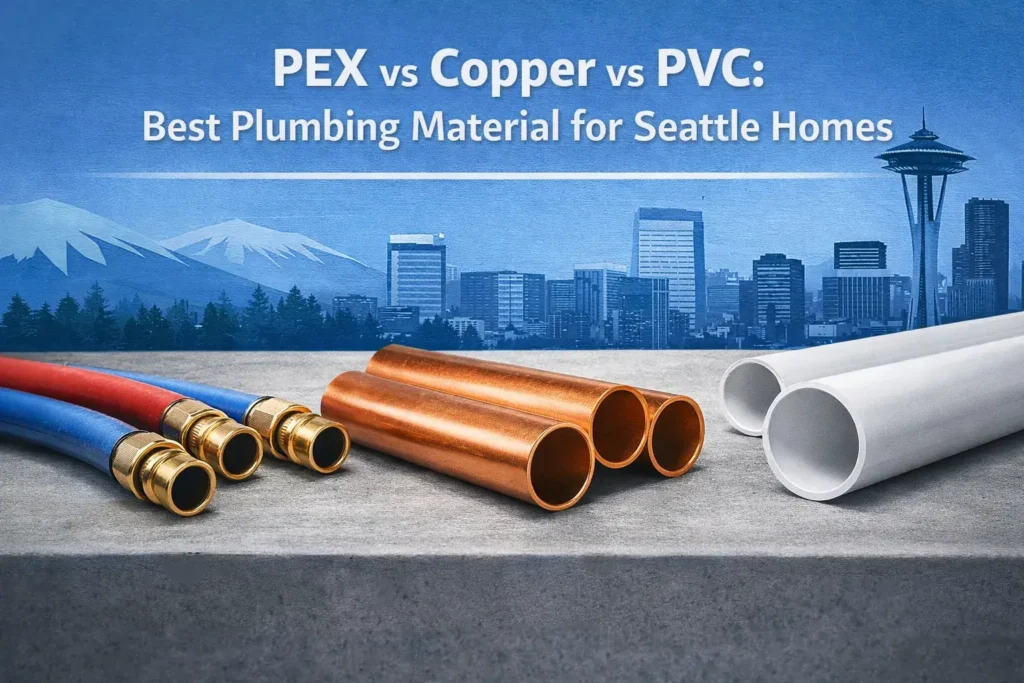
Choosing the best plumbing material is crucial for protecting your Seattle property’s value, performance, and peace of mind. This quick-reference guide breaks down the strengths, costs, and best uses of PEX, copper, and PVC so you can make informed decisions—with the insight and support of Express Repiping’s certified specialists.
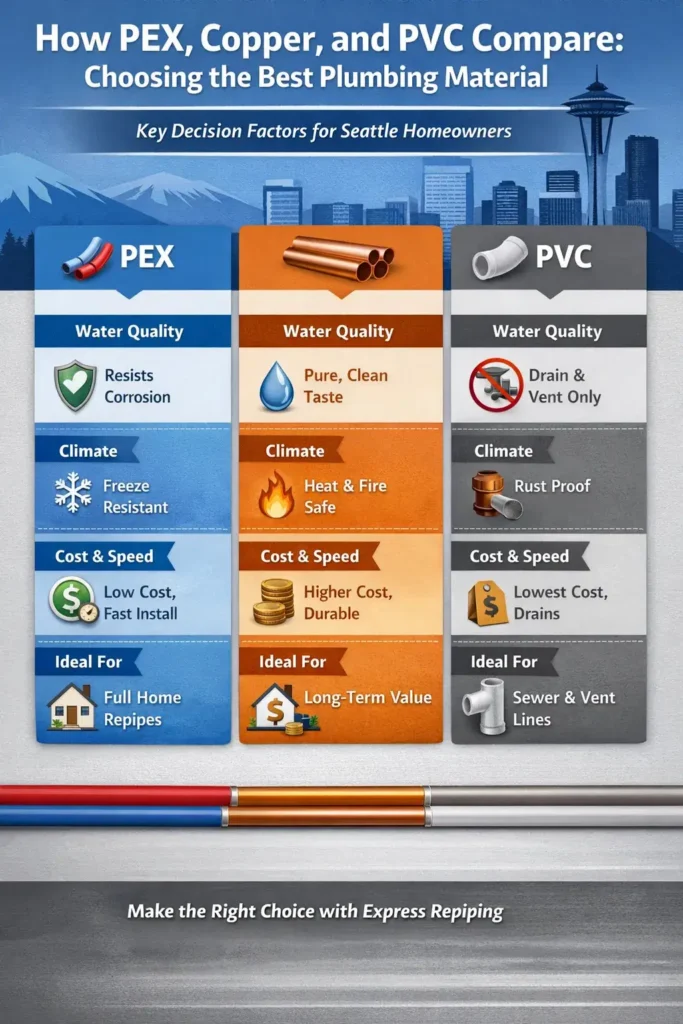
- PEX offers unmatched flexibility and quick installation—it bends easily around corners, cuts labor time by up to 60%, and is up to 68% less expensive than copper, making it ideal for full-house repipes and remodels.
- Copper delivers timeless durability and purity, lasting 50–70+ years with natural resistance to bacteria and fire, and is especially valued if you plan to boost resale value or need visible, long-lasting supply lines.
- PVC is the budget-friendly champion for drain lines—it’s cost-effective ($0.50–$3/foot), simple to install, and resists rust and buildup, but it’s strictly for non-pressurized drains and vents, never for water supply.
- Seattle’s freeze-prone climate and water chemistry make PEX the top pick for many properties, as it resists bursting and doesn’t corrode in hard or chlorinated water—always check local codes before finalizing your choice.
- Installation complexity and repair costs vary: PEX minimizes wall damage and labor; copper requires professional soldering and more invasive access; PVC is easy for drain retrofits but not approved for potable water in 2026.
- Express Repiping guarantees code compliance and peace of mind on every install, providing free property assessments, transparent pricing, and a 25-year warranty—so you invest confidently in your property’s future.
- Expert consultation prevents costly mistakes: Avoid picking PVC for supply lines, overlooking code rules, or ignoring water conditions that could shorten pipe life—professional guidance ensures the right fit, the first time.
Ready to upgrade with confidence? Explore the full article for detailed material comparisons and actionable advice from Seattle’s most trusted repiping specialists.
Introduction
What Makes PEX the Best Plumbing Material for Seattle Homes
You turn on the tap—and instead of a steady stream, you get rust-colored water and barely enough pressure to fill a glass.
It’s a familiar frustration for many Seattle homeowners, especially as aging pipes quietly deteriorate behind the walls. In fact, over 50% of homes in the area built before 1990 are overdue for a major piping upgrade, risking water damage, leaks, and costly emergency repairs that catch owners off guard.
But with so many choices—PEX, copper, PVC, and more—how do you know which system will actually protect your investment, improve water quality, and help avoid repeat plumbing headaches?
The answer isn’t always obvious. Each material comes with its own blend of:
- Cost and installation speed: PEX can be up to 68% cheaper than copper, with installs finished in days, not weeks
- Lifespan and reliability: Copper boasts decades of performance—but only in the right conditions
- Code compliance and safety: Seattle’s climate and strict plumbing codes can disqualify trendy materials that work elsewhere
Picking the wrong pipe could mean higher maintenance costs, failed inspections—or even insurance red flags. But the right choice delivers long-term peace of mind, safe water, and a boost in property value that’s hard to beat.
Express Repiping understands what’s at stake for every property owner. Our experts guide you through the pros and cons—offering personalized recommendations based on local water quality, freeze risk, budget targets, and your long-term plans, so you never waste a dollar or a day on a system that won’t last.
In the next section, we’ll lay out exactly what sets each major piping system apart in 2026—from why PEX is taking Seattle by storm to when copper or PVC still steal the show—making it easy for you to compare options and ask the right questions.
Understanding Plumbing Material Options in 2026
Choosing the right plumbing material is one of the most important investments you’ll make for your Seattle or Washington property—in 2026, the main contenders are PEX, copper, PVC, and a few key alternatives.
Every material brings unique benefits and potential drawbacks, affecting how your water flows, how long your system lasts, and what your project will cost.
The Big Three (and More): What’s in Your Walls?
Here’s the rapid-fire breakdown on each material:
- PEX (cross-linked polyethylene): Flexible, color-coded red and blue for hot/cold water, ideal for both full house repipes and remodels.For more details on PEX and its benefits, visit the Plastics Pipe Institute for expert resources.
- Copper: The classic—rigid, durable, resists bacteria, handles heat and pressure, beloved for resale and longevity.For expert maintenance tips on copper pipes, check out this guide on copper pipe maintenance.
- PVC: Lightweight, white plastic mainly used for drain, waste, and vent lines—not water supply.
- Other options:
- CPVC (handles hot water, but more brittle than PEX)
- Galvanized steel (outdated—corrosion and rust issues)
- Polybutylene (historical use—now avoided due to widespread failures)
Every home—new or old—faces a choice when pipes fail, water quality drops, or renovation demands an update.
What Seattle Homeowners Really Need to Compare
Decision factors almost always include:
- Water quality: Hard or chlorinated water? Go for corrosion-resistant PEX.
- Building codes: Seattle and WA codes may limit material choices—copper or PEX often preferred.
- Climate: Freeze-prone winters increase risk for rigid pipes—PEX’s flexibility makes it popular in our region.
- Budget and timeline: PEX averages $0.50–$2/ft (up to 68% cheaper than copper), PVC is lowest for drains, while copper starts at $2/ft, requiring skilled labor.
- Long-term value: Are you planning to sell or stay for decades? Copper appeals to long-term planners; PEX suits fast, affordable upgrades.
For homeowners with older homes in Seattle, PEX repiping is often the most effective solution. Explore why PEX is the best option for older properties in our Best Solution for Repiping Older Homes blog post.
Express Repiping brings a consultative approach—“We explain your options, price points, and exact code requirements before you commit.”
Picture This: Making the Right Call for Your Property
Imagine a 1960s Seattle home with failing galvanized pipes—water rusts, pressure drops, and insurance companies raise red flags.
- The owner considers PEX for its bendability and fast, low-impact installation—minimal drywall cutting, project finished in days, not weeks.
- A classic Ballard brick wants to preserve value and stick to tradition; copper’s longevity and fire resistance make it the right investment.
“There’s no one-size-fits-all: the smartest pipe is the one tailored to your home, water, and future plans.”
When it’s time to upgrade, knowing the difference between PEX, copper, and PVC empowers you to ask the right questions and expect transparent answers. With Express Repiping’s personalized guidance, you’ll get a system that’s code-compliant, cost-effective, and built for your unique needs—so your property is protected in 2026 and beyond.
PEX Pipe: Features, Benefits, and Applications
PEX Construction and How It Works
PEX, or cross-linked polyethylene, is a high-performance plastic tubing crafted by bonding polyethylene molecules, resulting in greater strength and flexibility than standard plastic pipes.To learn more about PEX and its properties, check out this Wikipedia article on PEX
You’ll recognize PEX by its bold color-coding: red for hot water, blue for cold, and white for either, making system layout simple at a glance.
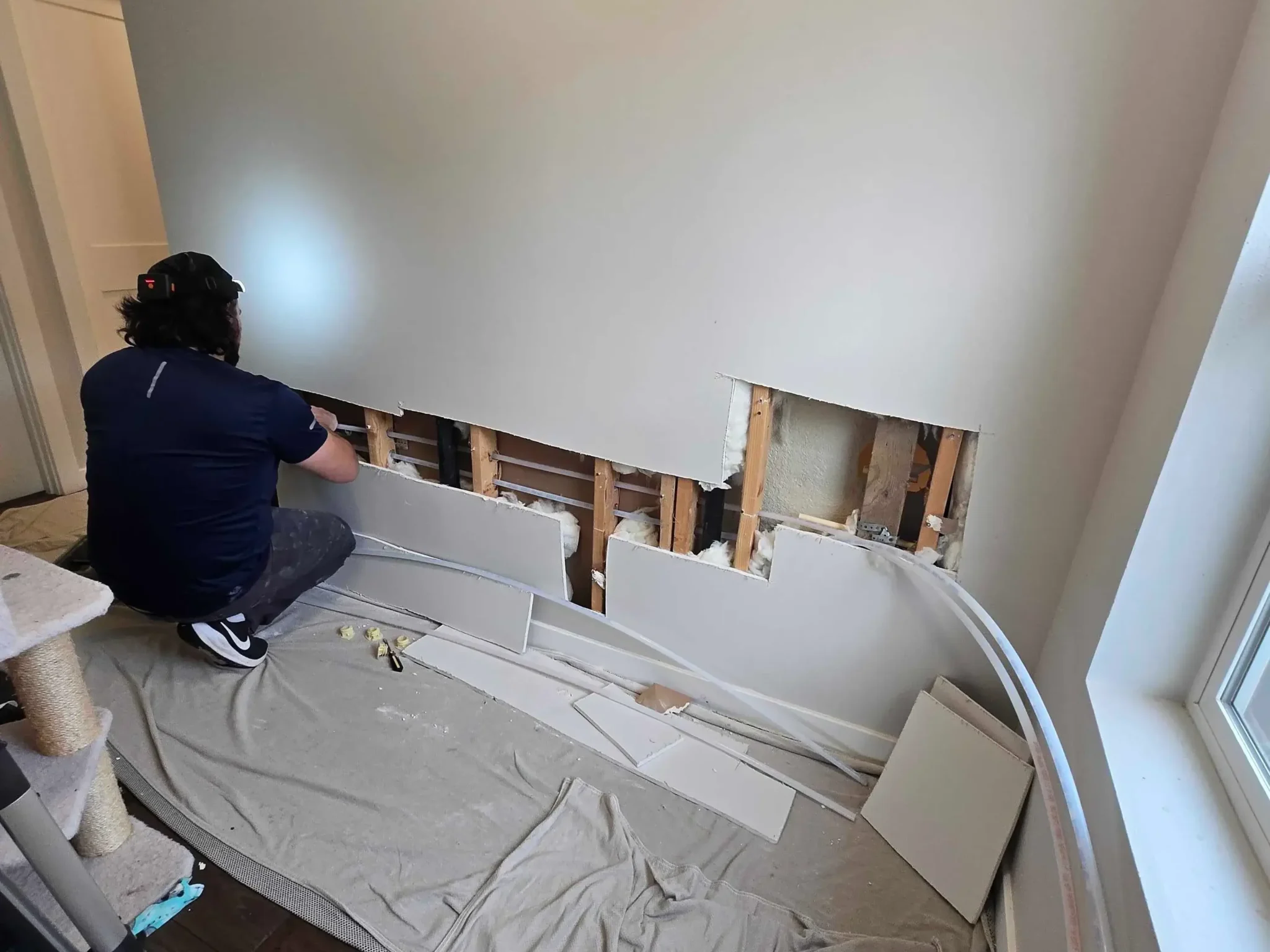
Installers use several connection methods—crimp rings, push-fit connectors, or expansion fittings—making PEX adaptable for both professional and DIY projects.
Picture this: Technicians threading brightly colored pipes around tight corners inside a Seattle basement, no soldering or bulky elbows needed.
If you’re considering PEX repiping for your home, check out our PEX Repiping: Beneficial and Affordable Idea blog post to learn why PEX is the ideal choice for many Seattle homeowners.
—
Key Advantages of PEX
PEX’s flexibility isn’t just about bending pipes—it’s about modern plumbing peace of mind.One of the biggest benefits of PEX pipes is their flexibility and long-term reliability — you can dive deeper into the benefits of PEX repiping for Seattle homeowners in our detailed article on PEX repiping benefits.
Key benefits include:
- Flexible installs: Quickly bends around beams and tight spaces, reducing the number of joints and potential leak points.
- Freeze-resistant toughness: Expands if frozen but rarely bursts—crucial for Seattle’s unpredictable cold snaps.
- Corrosion and scale-proof: Doesn’t pit or clog, performing reliably even in old homes with hard or treated water.
- Quiet operation: Dampens the “water hammer” noise that echoes in metal piping.
- Fast, tidy retrofits: Minimal wall disruption and quick connections—install times can be up to 60% faster than with copper.
A homeowner might marvel: “The whole water system upgrade took just one day—with no mess and zero fuss!”
—
Considerations and Limitations
PEX is brilliant indoors, but comes with a few caveats to keep your property protected.
Keep in mind:
- UV sensitive: Sunlight makes PEX brittle—never install outdoors or near windows.
- Rodent risks: Mice and rats can chew through PEX, so proper placement and protection are essential.
- Water-supply only: Not rated for drains or vent lines.
- Melts in fire: Unlike copper, PEX isn’t fire-proof, but passes all potable water safety codes for residential plumbing.
- Local code alerts: Every community—including Seattle—has unique plumbing rules; our certified team ensures every PEX job is 100% code compliant.
—
Best Use Cases
PEX shines in modern remodels and smart upgrades.
Top applications:
- Indoor hot and cold water supply lines in homes, apartments, or offices.
- Full-house repipes—especially for aging properties plagued by leaks or rust.
- Tight crawlspaces or complex layouts where bending pipes saves time, money, and future headaches.
In short, “PEX is the flexible, future-proof choice for most 2026 homes—whether you’re building new or bringing 1920s plumbing up to speed.”
To summarize, PEX pipes deliver fast installs, lasting performance, and adaptable design—providing Seattle homeowners with a quieter, more reliable plumbing system and the peace of mind that comes from expert, code-compliant installation.
Copper Pipe: Features, Benefits, and Applications
Copper Construction and Performance
When it comes to plumbing solutions that stand the test of time, copper pipes remain the gold standard for both tradition and performance.
There are three main types used in Seattle and beyond:
- Type L: Thick-walled and versatile—ideal for interior repipes and residential supply lines.
- Type M: More affordable, with thinner walls—best for low-pressure or non-potable lines.
- Type K: Extra thick—preferred for underground installations and commercial projects.
All copper lines typically require soldered or compression fittings, creating strong, leak-proof connections. However, professional installation by licensed specialists is a must—copper demands precise tools and expert care.
“Picture this: a home with beautiful copper lines, shining in newly opened walls—a symbol of both quality and peace of mind.”
Key Advantages of Copper
Copper has built its reputation on delivering reliability, safety, and unmatched longevity:
- Lasts 50-70+ years—making it an investment for generations.
- Handles heat and high pressure—no warping in hot water lines.
- Naturally resists bacteria and fire—won’t melt or contaminate your water in emergencies.
- No plastic taste or odor—delivering clean, fresh water, every time.
- Sustainably recyclable—a serious win for environmentally driven property owners.
“A copper repipe is the premium choice for those who want their investment to stand strong for decades.”
Considerations and Limitations
While copper is renowned for its durability, there are a handful of realities that homeowners should know:
- Higher upfront costs: $2–$12/ft for materials—plus more for skilled labor.
- Rigid installation: Means more drywall cuts, more wall repairs, and less flexibility in confined spaces.
- Corrosion risk: Seattle’s acidic or hard water may cause premature pitting or pinhole leaks.
- Freeze vulnerability: If water freezes inside, pipes can split—making insulation critical.
- Potential issues: Metallic taste in rare water conditions; older homes may have lead in solder joints (less common after 1986).
“If you’re looking for pure staying power, copper delivers—but always ask your installer about your local water chemistry.”
Best Use Cases
Copper is the go-to for scenarios where quality and longevity matter most:
- Major property upgrades or long-term investments.
- Exposed lines in sunny or pest-prone areas.
- Hot water lines and critical main supply pipes.
- Commercial buildings and historic renovations that demand an authentic look.
Copper’s classic appearance also makes it a sought-after feature in high-end renovations and luxury homes.
For Seattle and Washington property owners planning to stay in their homes for decades—or for those prioritizing lasting value—copper is the reliable, proven choice.
When you want a piping system that outlives trends and withstands time, copper supplies both performance and peace of mind.
PVC and Alternative Materials: Roles and Limitations
PVC in Modern Plumbing
Polyvinyl chloride (PVC) is a staple for drain, waste, and vent lines in Seattle homes. Its bright white appearance is instantly recognizable in crawl spaces and basements.
Installation is as simple as a quick cut, a swipe of solvent glue, and a twist—making it a go-to for plumbers needing affordable, code-compliant drainage solutions.
PVC pipes stand out for these reasons:
- Cost efficiency: Typically $0.50–$3 per foot, leading the market in budget-friendliness for non-supply lines.
- Simple assembly: No soldering or heating—just glue, connect, and go.
- Lightweight and easy to maneuver: Perfect for running long vent stacks or spanning tricky foundation spaces.
A typical scenario: A plumber replaces decades-old cast iron drain lines in a rental property with crisp, new PVC in a single day, restoring quiet, clog-free drains—without breaking the bank.
—
Advantages of PVC
For non-pressurized plumbing, PVC delivers serious convenience. Homeowners and contractors love it for:
- Lowest Upfront Cost: Both material and labor for drain/vent projects.
- Corrosion Resistance: Unlike galvanized or old steel, PVC won’t rust or flake over time.
- Smooth Interior Surface: Minimizes buildup and reduces the chance of hair or soap clogs in drain lines.
- Lightweight Transport: Carry dozens of feet to your basement or ADU project—without the heavy lifting.
“PVC keeps drains running quietly and maintenance costs low—a smart choice for budget-focused upgrades.”
—
Limitations and Restrictions
While PVC is strong for drains, it comes with important limits. Always remember:
- Not for Hot Water or Supply Lines: Warps at 140°F; not code-approved for drinking water in most of Washington.
- Rigid & Brittle in Cold: Vulnerable to bursts if frozen—risky for exposed exterior piping.
- UV Sensitivity: Sunlight quickly degrades pipe, so keep it inside walls or underground.
- Non-potable only: Potential for chemical leaching restricts use to drains and vents.
“PVC’s superpower is drains—not supply lines. Stick to intended use to protect your property and water quality.”
—
Use Cases and Alternatives
PVC is excellent for:
- Sewer/drain lines
- Vent stacks
- Sump pump discharge and exterior drains (buried only)
Not recommended for:
- Whole-house repipes
- Main fresh water supply lines
Alternative materials worth knowing:
- CPVC: Similar to PVC but safe for hot water supply; code-approved, but less flexible than PEX.
- Galvanized steel & polybutylene: Older materials, now obsolete due to corrosion/failure risks—Express Repiping often replaces these in Seattle’s classic homes.
- Modern PEX or copper: The top choices for new supply lines in 2026.
—
PVC is the champion for affordable and reliable drainage, but never a substitute for supply plumbing in new repiping projects. The major takeaway: use PVC for what it does best—quiet, low-maintenance drains—while relying on PEX or copper for safe, long-lasting water delivery throughout your home.
Side-by-Side Comparison: Performance, Cost, and Lifespan
Fast Reference: Material Performance at a Glance
Choosing the right pipe isn’t just about upfront cost—performance in Seattle’s unique climate and water conditions matters just as much. Here’s how the three main players stack up on the features you’ll notice most:
| Feature | PEX | Copper | PVC |
|---|---|---|---|
| Cost | $0.50–$2/ft (up to 68% cheaper than copper) | $2–$12/ft (higher upfront costs) | $0.50–$3/ft (low cost for drains) |
| Flexibility | Highly flexible, bends easily | Rigid, requires joints and cutouts | Rigid, brittle in cold temperatures |
| Freeze Resistance | Expands if frozen but rarely bursts | Can crack if frozen | Brittle, cracks if frozen |
| Temperature Tolerance | Up to 180°F | Handles high temperatures and pressure | Not rated for hot water (warps at 140°F) |
| Corrosion Resistance | Corrosion and scale-resistant | Susceptible to corrosion (especially in acidic water) | Corrosion-resistant |
| Lifespan | 30–50+ years | 50–70+ years | 20–100 years (mainly for drains) |
| Best Use | Water supply lines, full-house repipes | Long-term investments, visible supply lines | Drainage, venting |
| Installation Ease | Easy, quick installation, DIY-friendly | Requires professional installation, soldering | Simple, DIY installation for drains |
- Flexibility
- PEX: Highly flexible—curves around corners, perfect for tight spaces
- Copper: Rigid; requires more joints and cutouts
- PVC: Rigid and brittle—best for straight, accessible drains
- Pressure/Temperature Tolerance
- PEX: Withstands modern water pressure, up to 180°F
- Copper: Handles highest temp/pressure; proven in extreme use
- PVC: Not rated for hot water, warps above 140°F
- Freeze/Crack Risk
- PEX: Expands under freeze—rarely bursts
- Copper: Cracks easily if frozen
- PVC: Brittle cracking in cold temps
- Corrosion Resistance
- PEX: Impervious to rust, scale, chlorine
- Copper: Susceptible to acidic/hard water corrosion
- PVC: Doesn’t corrode, but can leach when water is very hot
- Sound/Insulation
- PEX: Quiets “water hammer” and vibration
- Copper: Conducts noise—audible water rush
- PVC: Generally quiet, especially on drains
Picture this: Bend PEX right around a joist—no noisy metal clanging, no ugly wall patching. In an older Seattle home, these differences can make or break a smooth retrofit.
—
What Does It Cost? A Practical Breakdown
For a typical Seattle repipe, material and labor combine for the total investment—here’s where the real savings come in:
- Material Cost Ranges (per foot)
- PEX: $0.50–$2—up to 68% cheaper than copper
- Copper: $2–$12—top-tier longevity, but top-tier price
- PVC: $0.50–$3—drains only
- Installation Complexity & Labor
- PEX: Fastest installs, minimal wall damage; DIY-friendly for small jobs
- Copper: Requires expert soldering/compression, intense labor
- PVC: DIY for easy drains; not approved for whole-house supply in 2026
Get this: Express Repiping’s certified pros deliver efficient, spotless installs—always code-compliant and clean, with detailed post-install support.
—
Durability and Lifespan: Investing in Peace of Mind
- PEX: 30–50 years (see best results in moderate conditions, avoid constant high heat)
- Copper: 50–70+ years (shortest life in acidic water—common in some WA homes)
- PVC: 20–100 years on drains (lifespan can swing wildly due to soil, movement, or UV light)
Express Repiping backs PEX and copper installs with a 25-year warranty**—a lifespan guarantee that gives Seattle homeowners peace of mind well after the install is done.
—
The key is simple: PEX offers unmatched flexibility and value for most water supply lines, copper wins for timeless durability, and PVC shines in the drain and vent game. Let your property, local water, and long-term plans guide the right choice—with help from Seattle’s leading certified specialists.
Choosing the Right Piping Material for Your Property
Factors to Consider
Picking the best piping material isn’t just about today’s price—it’s about what will protect your property for decades to come. Seattle homeowners face unique challenges, from heavy rain and freezing nights to highly variable water chemistry.
Key decision points to evaluate:
- Water quality: High chlorine? Acidic or hard water? PEX resists scale and corrosion where copper can degrade; copper offers the purest taste but needs the right chemistry for longevity.
- Building codes: Seattle and Washington state have strict requirements—only certain materials pass inspection for supply vs. drain.
- Budget: PEX saves up to 68% on install vs. copper; PVC is only for drains but has the lowest upfront cost.
The right choice will also depend on:
- Property type and project scope: Full home repipes, single bathroom upgrades, new builds, or commercial retrofits all have different needs.
- Freeze exposure: PEX shines in cold zones—it flexes instead of bursting, unlike copper or PVC.
- Environmental and resale priorities: Copper is fully recyclable; PEX is non-recyclable but highly efficient; PVC’s lifespan can vary and has mixed environmental impacts.
“The pipe beneath your walls shapes your home’s value and peace of mind for decades.”
Expert Guidance: Why Consultation Matters
When it comes to plumbing, DIY mistakes and code violations can easily cost far more than professional guidance.
Express Repiping’s certified specialists provide:
- Thorough property assessment—including water testing and code review.
- Clear, honest recommendations—always tailored to your exact scenario and budget.
- Transparent, free quotes and a 25-year warranty for lasting peace of mind.
Picture this: After a quick inspection, you receive a side-by-side material comparison aligned with your water chemistry, freeze risk, and project timeline—no hidden fees, just actionable answers.
Recommendations by Scenario
Best-fit materials for common Seattle situations:
- Full home repipes/major remodels: Choose PEX for flexible, cost-effective, code-approved fresh water supply.
- Partial upgrades or additions: Pair PEX or copper as needed—for visible exposure, copper’s durability shines; for tight spaces, PEX is easiest.
- Accessory dwelling units (ADUs): PEX enables quick, noninvasive installs and adapts to unique layouts.
- Commercial properties: Evaluate copper for high-traffic, high-value areas; use PEX for speed and cost control.
Common mistakes to avoid:
- Selecting PVC for supply lines—it’s for drains only.
- Ignoring water quality (hard water may shorten copper lifespan).
- Overlooking code updates—always check with certified pros.
“Choosing the wrong pipe can mean hidden headaches and expensive repairs down the road.”
For maximum value, combine professional guidance with a transparent estimate—contact Express Repiping for a free, no-obligation quote and discover the most reliable solution for your property’s future.
Making the right pipe choice is simpler and safer with expert eyes on your project—you gain clarity, savings, and long-term confidence in every drop of water that flows through your home.
Conclusion
Making the right plumbing choice isn’t just about pipes—it’s about protecting your investment, ensuring clean water, and bringing lasting peace of mind to your Seattle property.
The smartest decision is one tailored to your unique needs, supported by expert insight and a commitment to code compliance, cost-effectiveness, and future-ready solutions.
—
Key takeaways you can use right now:
- Prioritize water quality and local codes—pick materials proven to perform in Seattle’s climate and meet inspection requirements.
- Balance your budget with long-term value—PEX offers rapid, affordable installs while copper stands out for endurance and resale appeal.
- Use PVC for drains only—never for supply lines; match every material to its best use.
- Consult certified specialists—their expertise protects you from costly mistakes and helps you avoid hidden pitfalls.
- Request a transparent, side-by-side quote before starting any project—clarity now saves stress and expenses later.
—
What’s your next move?
- Schedule a free, no-pressure assessment with Express Repiping—get expert guidance and answers tailored for your property.
- Ask questions about code, water chemistry, and timelines before committing—your informed choices define your home’s future.
- Act now to prevent leaks and system failures that could impact your property’s value and safety.
—
When you choose the right pipe, you’re investing in comfort, safety, and the legacy of your property.
A great plumbing upgrade isn’t just a fix—it’s an investment in everyday peace of mind and tomorrow’s possibilities.
Take the confident next step—let your home’s water system be something you never have to worry about again.
What is the best plumbing material for Seattle homes?

The best plumbing material for Seattle homes depends on factors like water quality, climate, and budget. PEX is often the top choice due to its flexibility, affordability, and resistance to freezing. However, copper is ideal for long-term durability, and PVC is great for drainage systems.
Why should I choose PEX for repiping in my Seattle home?

PEX is a popular choice for repiping Seattle homes because it’s cost-effective, quick to install, and resistant to freezing temperatures. It’s a flexible material that bends easily around corners, reducing installation time and labor costs.
How long do PEX pipes last compared to copper and PVC?

PEX pipes can last 30–50 years, depending on water conditions and maintenance. Copper pipes can last 50–70+ years, while PVC is typically used for 20–100 years in drainage systems. PEX offers durability with less maintenance, making it a great option for many homeowners.
Is PEX safe for drinking water?

Yes, PEX is safe for drinking water. It is approved by the National Sanitation Foundation (NSF) for potable water use. Unlike some older materials, PEX does not leach harmful chemicals, making it a safe and reliable choice for water supply lines.
Can PEX pipes be installed outside?

PEX pipes should not be installed outside where they are exposed to sunlight for extended periods. UV rays can degrade the material, causing brittleness. However, PEX can be safely installed indoors or in areas protected from sunlight, such as basements or crawlspaces.