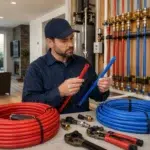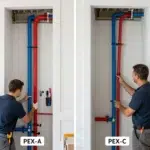
Choosing between PEX A and PEX B fittings directly impacts the efficiency, reliability, and budget-friendliness of your Seattle plumbing project. Below, discover the most crucial, actionable insights to help you select the right PEX solution with total confidence—and maximize your investment for decades to come.
- PEX A’s superior flexibility lets you bend pipes around tight corners with fewer fittings and minimal risk of leaks, making it ideal for complex layouts and cold Seattle winters.
- PEX B delivers affordability with a lower material cost ($0.21/ft) and sturdy performance—perfect for straightforward, budget-driven installations in both homes and commercial spaces.
- Expansion fittings (PEX A) enable higher flow rates and stronger water pressure by preserving the full pipe diameter, crucial for properties with multiple water demands.
- Crimp/clamp/insert fittings (PEX B) simplify installation and reduce up-front tool costs, but each additional connection point slightly reduces water pressure and increases potential leak risks.
- Compatibility is critical—never mix PEX A and PEX B fittings without proper certification, or you risk voiding warranties, causing leaks, and failing local plumbing inspections.
- Seattle’s 25-year freeze protection is a true advantage of PEX A, which can expand to absorb freezing without bursting—while kinked pipes are repairable with just a heat gun.
- Building codes and warranties demand certified materials—only NSF- and ASTM-approved PEX and installation techniques keep your system secure, insurable, and future-ready.
- Professional consultation ensures peace of mind—Express Repiping provides expert system matching, transparent pricing, and free quotes to maximize safety, savings, and satisfaction on every job.
Ready to upgrade your property’s plumbing with the ideal PEX system? Dive into the full article to discover how Express Repiping guides Seattle homeowners toward stress-free, code-compliant solutions built to last.
Introduction
A single, unexpected leak can cost Seattle homeowners thousands in repairs—but choosing the right PEX fittings could be the difference between a 25-year dry spell and costly callbacks.
If you’re replacing old galvanized pipes or prepping a commercial remodel, you’ve likely run into this question: Should you trust PEX A or PEX B for your next plumbing project?
Both options promise durability, flexibility, and peace of mind—but their differences matter more than ever when:
- Older homes demand fewer wall cuts and less invasive work
- Cold snaps threaten burst pipes throughout Washington
- Property owners want stronger water pressure with fewer leak risks
It’s not just the pipe that counts—fitting compatibility determines everything from installation success to long-term warranty, and even your home insurance coverage.
Here’s the truth: Mixing the wrong pipe and fitting not only leads to leaks but can actually void your 25-year warranty—a mistake we see far too often during emergency repairs in Ballard bungalows and Bellevue high-rises alike.
You’ll soon discover:
- How PEX A compares with PEX B—from molecular structure to flexibility and cost
- The critical role fittings play in performance, code compliance, and efficiency
- Which type best suits Seattle’s unpredictable weather, aging infrastructure, and your unique property needs
You need clarity, not confusion—so we’ll break down the features, bust the myths, and share real-world advice from certified specialists who’ve repiped hundreds of Seattle’s homes and businesses.
Ready for a stress-free repipe and water that runs strong through every season? Here’s what you need to know before you cut a single pipe or sign for quotes—next, let’s reveal what truly sets PEX A and PEX B apart.
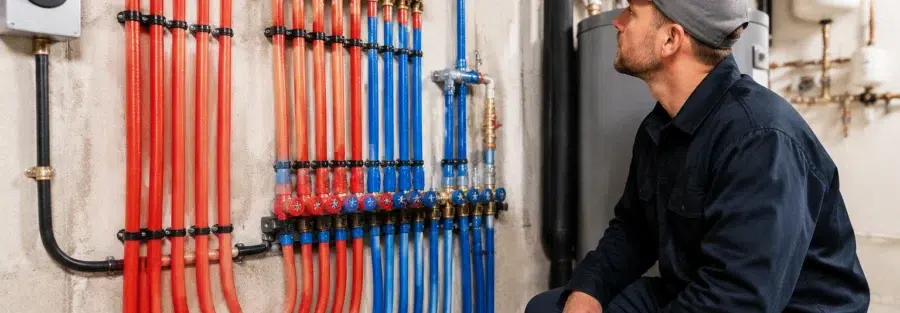
Understanding PEX A and PEX B Tubing Fundamentals
PEX tubing stands for cross-linked polyethylene—a durable, flexible plastic pipe used in modern plumbing. What sets PEX apart is the “cross-linking” process, creating molecular bonds that make the tubing incredibly resistant to heat, freezing, and pressure.
Whether you own a craftsman bungalow in Ballard or a busy downtown Seattle office, chances are your plumbing upgrade will involve one of two types: PEX A or PEX B.
PEX A vs. PEX B: Manufacturing & Flexibility
The difference starts at the molecular level:
- PEX A is crafted using the Engel (peroxide) method, ensuring 85–89% molecular cross-linking. This makes it remarkably flexible—think smooth curves around tight spaces and fewer fittings needed.
- PEX B uses the silane (moisture-cure) process, resulting in 65–70% cross-linking. While stiffer and more budget-friendly (costing around $0.21/ft vs. $0.59/ft for PEX A), its strength shines in straightforward layouts and budget-focused installs.
Picture this: A PEX A line weaves through a maze of joists with just a heat gun and a bend—no noisy elbows, less risk of leaks.
Where Does Each Type Work Best?
You’ll see both types in:
- Residential repiping (especially in Seattle’s aging homes)
- Commercial upgrades (like restaurants needing reliability)
- New construction
- Quick repairs
Homeowners often ask: “Can I use any fitting on either pipe?” Here’s the truth—compatibility matters for leak-free performance.
Pipe/Fitting Compatibility and Myths
- PEX A is designed for expansion fittings—the pipe stretches and contracts for a watertight seal.
- PEX B pairs naturally with crimp/clamp/insert fittings, which grip the pipe tight.
- Some modern PEX B brands (such as Zurn) now certify for expansion fittings, but not all PEX B pipes can handle the stress without micro-cracks.
- It’s a popular myth that all PEX systems are interchangeable—mixing the wrong pipe and fitting can void your warranty and lead to leaks.
A certified installer will always match the correct pipe and fitting system, following ASTM and Washington State plumbing codes.
Why Express Repiping Uses Only Certified PEX
Every Express Repiping project features:
- Code-approved, NSF-certified PEX A and B—trusted for Seattle and Washington installations.
- Rigorous adherence to compatibility guidelines—preventing preventable leaks.
- A 25-year warranty for your peace of mind.
When you choose the right PEX—and a repiping partner who takes compatibility seriously—you get reliability that stands the test of time and weather. Your next step: Always demand certified PEX and insist on expert installation for maximum value and confidence.
Key Differences in Fitting Types for PEX A and PEX B
Choosing the right fitting is at the heart of leak-free, dependable plumbing—especially in the fast-changing Seattle market.
Understanding whether to use expansion fittings or crimp/clamp/insert fittings can be the difference between a stress-free repipe and surprise headaches down the road.
Overview: PEX Fitting Systems & Standards
There are two dominant PEX fitting systems:
- Expansion (ASTM F1960): Primarily for PEX A
- Crimp/Clamp/Insert (ASTM F1807/F2159): Common with PEX B
Each system uses unique tools, installation methods, and materials.
Compatibility matters: Using the wrong combination can lead to water damage, code violations, or voided warranties.
Side-by-Side Comparison: At-a-Glance Matrix
| Feature | Expansion Fittings (PEX A) | Crimp/Clamp/Insert Fittings (PEX B) |
|———————-|——————————|——————————————–|
| Standard | ASTM F1960 | ASTM F1807 / F2159 |
| Process | Expand pipe/sleeve; contracts for seal | Slide on ring, crimp with tool |
| Typical Pipes | PEX A (flexible) | PEX B (stiffer); may use on PEX A |
| Tool Cost | ~$250+ (expansion) | ~$150+ (crimp/clamp) |
| Leak Risk | Lower if installed correctly | Potential mis-crimp, more connections |
| Install Speed | Faster in tight layouts | Quicker in straightforward jobs |
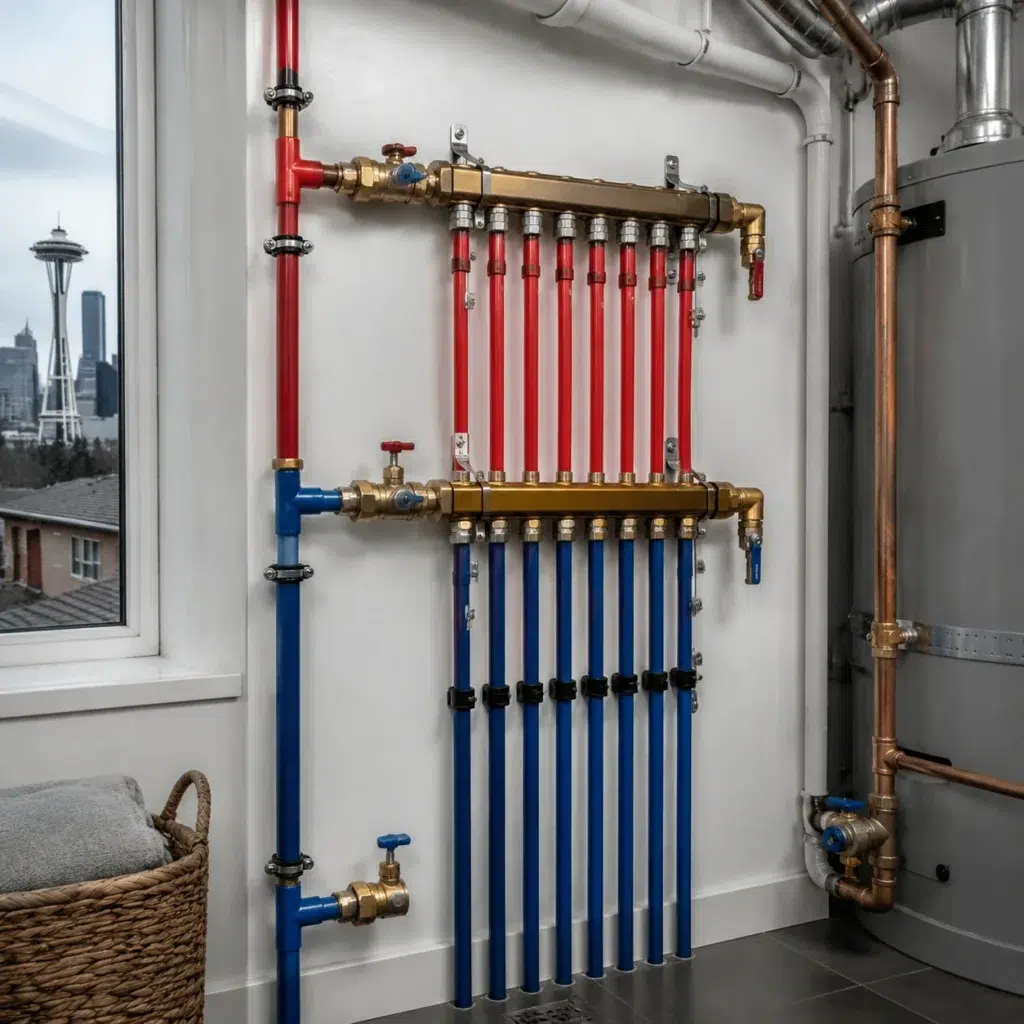
Expansion Fittings (PEX A): Flexibility Meets Performance
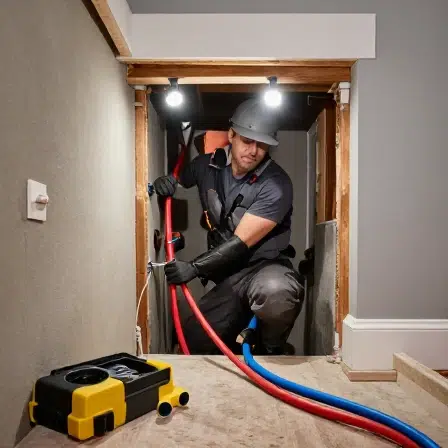
Picture this: An expert plumber effortlessly loops PEX A through a tight 1920’s Seattle crawl space, bending around beams with minimal fittings.
Here’s why expansion fittings make a difference:
- Pipe and ring are expanded using a special tool; pipe contracts to create a water-tight grip—no glue or solder.
- Requires an expansion tool and expansion rings (typically costing $250+ for pro-quality kits).
- Best for complex routes, cold climates, and professional installs thanks to fast recovery and full-bore flow.
- Fewer connections required because of the pipe’s flexibility—less chance for future leaks and fewer parts to inventory.
Tip: Expansion fittings excel for multi-bath homes and sharp bends—flow remains unrestricted, even as demand spikes.
Crimp and Clamp/Insert Fittings (PEX B): Simple, Reliable, Budget-Friendly
For straightforward repipes or budget-minded DIY projects, crimp/clamp/insert fittings dominate.
- Process: Insert a fitting, slide on a ring, and clamp down with a crimp tool (as little as $150 for quality DIY sets).
- Lower cost per foot (PEX B pipe is $0.21–$0.35/ft vs. $0.59+/ft for PEX A) and a smaller up-front tool investment.
- Perfect for commercial jobs, simple routing, and quick residential installations where time is critical.
- Widely available—over 50% of modern repipes use PEX B crimp systems for this very reason.
Watch out: If a crimp is off-center or out-of-round, it creates an instant leak risk—precision is key.
Compatibility, Codes, and Local Best Practice
In Seattle and across Washington State, plumbing codes closely follow ASTM standards.
- PEX A can often use crimp/clamp fittings, but not all PEX B is expansion-compatible—always check for brand certification.
- Cross-using fittings without manufacturer and code approval risks both your investment and home insurance coverage.
- A professional assessment ensures you meet inspection standards and maximize your 25-year warranty with Express Repiping.
Instant Takeaways
- Not all PEX is the same—never mix fitting types without validation and code approval.
- Expansion fittings = unmatched flexibility and flow in tight, high-demand applications.
- Crimp/clamp systems = ideal for value-driven, straightforward, or commercial installs.
When you want peace of mind, a full-repipe warranty, and code compliance—from Ballard bungalows to Bellevue high-rises—get a specialist’s guidance before you choose your PEX and fittings.
Performance and Installation Comparisons: What Matters for Your Project
Choosing between PEX A and PEX B fittings can make or break the performance—and even the price—of your plumbing project. For homeowners in Seattle, understanding the side-by-side benefits is the fastest way to peace of mind.
Flow, Pressure, and Layout Demands
PEX A expansion fittings maintain a full-bore diameter—delivering higher flow rates and stronger pressure, especially vital for homes with multiple showers or simultaneous water use.
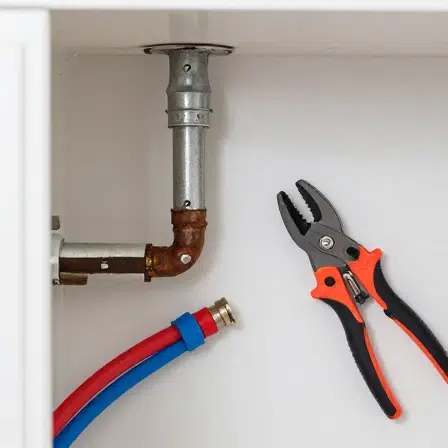
PEX B crimp/insert fittings introduce a smaller interior diameter at each joint, which can reduce water flow by up to 5 PSI per 90° fitting and often require more fittings due to their stiffness.
When laying pipe through a maze of tight corners or old basements, PEX A flexes up to 90° bends without extra fittings, while PEX B may need additional elbows—each one a new potential leak point.
“More fittings mean more chances for leaks—especially when every PSI counts during Seattle’s morning rush.”
Durability, Freeze Resistance, and Safety Factors
- PEX A is famous for:
- Freeze flexibility: pipe expands up to 3x its size, resists bursting
- Fewer stress points: less risk of micro-cracks, smoother curves
- Kink repairability: quick fix with a heat gun, no pipe section replaced
- PEX B stands out for:
- Lab-tested burst pressures over 500 PSI
- Stiffness: can be an advantage for long, straight runs
- Lower cost: more affordable for large-scale projects
Seattle’s climate makes freeze resistance a real-world advantage—one less worry during that unexpected cold snap.
Install Timelines, Tool Costs, and Budget Impact
- Expansion tools for PEX A: $250+; crimp kits for PEX B: $150+
- PEX A pipe averages $0.35-$0.59/ft; PEX B $0.21/ft
- Each 90° expansion fitting: ~$1; crimp/insert: often half that cost
- Installation: PEX A’s flexibility can mean fewer holes, fewer elbows, and less disruption to your home—translating to real savings on labor
“A flexible pipe means less wall damage—and less time with water shut off.”
Common Issues and Troubleshooting Insights
- Expansion shrinking too slow in cold? Use a heat gun to speed contraction.
- Misshapen crimps? Always use an approved gauge; it’s the difference between a 25-year dry spell and a surprise leak.
- Tool failures happen—Express Repiping uses regularly calibrated tools to eliminate these risks.
For repairs down the road:
- PEX A kinks? Out comes the heat gun.
- PEX B kinks? It’s time to cut and replace—a key consideration for hidden lines or finished walls.
When every choice impacts the safety, efficiency, and budget of your project, knowing the differences in PEX A vs. PEX B fittings lets you pick the right solution for your property’s unique needs. Picture fewer holes in your walls, higher morning shower pressure, and a system built to last through Seattle’s coldest nights—that’s the Express Repiping promise.
Choosing the Right Fittings for Your Application
Selecting the ideal PEX fitting means balancing your property’s unique needs, layout, and investment priorities. There’s no one-size-fits-all—every home or business in Seattle faces its own plumbing challenges.
Application Analysis: Climate, Layout, and Budget
Start with the demands of your environment:
- Cold climates? Opt for PEX A with expansion fittings—these flex to absorb freezing, minimize leaks, and can be heat-repaired if kinked.
- Simple layouts or mild temps? PEX B with crimp/insert fittings may save on costs and provide straightforward peace of mind.
- Complex floor plans, retrofits, or tight spaces? PEX A’s flexibility reduces the need for elbow fittings and keeps water pressure high.
Picture this: A 1930s Seattle craftsman with awkward crawlspaces—PEX A’s fast-install expansion system means fewer invasive cuts, less time without water, and an easier full-house repipe.
Fitting Selection: Water Pressure, Users, and Building Type
Consider how your home or commercial property functions, day to day:
- High water demand (multi-user homes, rental units)? Expansion fittings for PEX A deliver near-full-bore water flow, crucial for maintaining pressure with multiple showers, laundry, and sinks in use.
- Lower user count or smaller footprint? A crimped PEX B system keeps costs down without sacrificing essential durability.
In commercial spaces—like restaurants or multi-story offices—reduced leak points and simpler pipe runs often make crimp systems a fast, budget-effective solution for busy schedules.
Codes, Warranty, and the Express Repiping Difference
Local plumbing codes in Seattle require certified, code-approved fittings—no exceptions. Our 25-year warranty only applies when fittings and methods fully comply with both manufacturer and city requirements.
- Always use compatible fittings: Some PEX B lines support expansion, but not all—double-check with your specialist.
- Mixing non-approved systems? It risks leaks, failed inspections, and voided warranties.
A West Seattle duplex chose PEX A expansion after crimp-ring leaks in older PEX B; result: zero call-backs, pressure boost, and new bathrooms up and running, fast.
DIY vs. Professional: When to Call for Backup
Thinking about installing fittings yourself? For small repairs, PEX B crimp kits can be DIY-friendly, but:
- Full repipes, multi-story jobs, or tricky layouts? Book a certified pro—Express Repiping offers free quotes and transparent walkthroughs.
- Our licensed team brings advanced tools, project planning, and deep code expertise.
- We prioritize safety, speed, and property protection on every job.
“PEX A means our plumbing survived another Seattle freeze—worth every penny.” That’s not just a review, it’s our daily goal.
The right PEX fitting protects your investment, safeguards your water pressure, and ensures your warranty stays solid. Professional insight makes the difference between a quick fix and a lasting solution—reach out for personalized guidance and stress-free installation options.
The Future of PEX Fittings: Trends and Innovations
PEX fittings are getting smarter and stronger every year—shaping how Seattle homes and businesses tackle repiping.
Manufacturers are rolling out hybrid fittings that blend the best features of traditional crimp, clamp, and expansion systems.
Picture this: You can now use universal push-to-connect fittings to join PEX, copper, or CPVC without any special tools.
“As new PEX fittings hit the market, plumbers save hours on installations and homeowners enjoy fewer leaks,” says the team at Express Repiping.
Product Innovations and Tool Upgrades
Modern PEX fittings are engineered for easier installs and fewer callbacks.
The hottest trends include:
- Hybrid crimp-expansion lines (combining secure fit with flow-friendly design)
- Enhanced PEX polymers for more chlorine and UV resistance—vital for aging Seattle water systems
- Toolkits with ergonomic handles, rapid-change heads, and digital crimp verification
The result? Up to 35% faster installation times and reduced risk for common mistakes, especially in multi-family or commercial settings.
“Imagine replacing 20 feet of pipe and 16 fittings in a crawlspace—now possible in half a day, with minimal mess.”
Building Code Changes and Testing Standards
PEX keeps evolving as Washington State and national codes adapt.
Recent ASTM and NSF updates have:
- Broadened acceptance of universal fittings in residential and commercial codes
- Tightened requirements for third-party testing of both pipe and fitting materials
- Boosted support for lead-free, low-leach, and recyclable PEX systems, driving healthier water and greener buildings
For Seattle property owners, this means new PEX systems are backed by strict certification—and your project is future-proofed against upcoming code changes.
Sustainability and Long-Term Value
Sustainability is front and center in new plumbing retrofits.
Modern PEX tubing lasts 40-50+ years, resists scale buildup, and reduces water loss from leaks.
Key benefits for property owners:
- Lower maintenance and fewer emergency calls over decades
- Options for recyclable fitting materials that align with green certification standards
- Reduced long-term costs compared to copper or galvanized systems
Express Repiping stays ahead of every trend with:
- Continuous technician training on new PEX systems and tools
- Quarterly certifications and hands-on demos for code-compliant installations
- Free educational sessions for Seattle homeowners on choosing safe, future-ready fittings
Innovation in PEX fittings means you can expect faster installs, safer water, and eco-friendly upgrades—all delivered by a team certified for today and tomorrow. In a fast-changing field, clear choices and long-term support make repiping less stressful and more rewarding than ever.
PEX Repiping Services
If you’re planning a complete plumbing upgrade, explore our professional PEX repiping services for Seattle homes and commercial properties. Our certified team installs high-quality PEX A and PEX B systems designed for long-term durability, better water pressure, and leak prevention.
Conclusion
Making the right choice between PEX A and PEX B fittings isn’t just about technical specs—it’s about protecting your investment, preserving water quality, and making your next plumbing upgrade stress-free.
When you understand what sets each system apart, you’re empowered to choose fittings that deliver reliability, efficiency, and peace of mind for your unique Seattle property.
—
Here’s what you can put into action today:
- Double-check pipe and fitting compatibility before your next project—this single step can prevent leaks and warranty issues down the road.
- Prioritize code-certified PEX and professional installation to ensure a system that stands up to Seattle’s climate and building codes.
- Consider your property’s needs: Choose expansion fittings for flexibility and flow in complex layouts, or crimp systems for budget and speed in straightforward jobs.
- Don’t risk shortcuts—insist on clear documentation and transparent quotes, especially for larger upgrades or full-house repipes.
- Leverage expert support: Reach out for a free inspection or personalized recommendation; a certified specialist can save you time, money, and worry.
—
Ready to move forward? Schedule a free quote with Express Repiping to discover your best-fit solution, guaranteed for 25 years.
Your plumbing system is too important for guesswork—make informed decisions, demand certified workmanship, and protect your property’s future value.
You deserve pipes and fittings that work as hard as you do; when quality matters, let expertise lead the way.
“Peace of mind starts with the right connection—get it right the first time.”
Seattle homeowners can review plumbing regulations and permit requirements through the Seattle Department of Construction
To learn more about modern PEX plumbing standards and certifications, visit the Plastic Pipe and Fittings Association