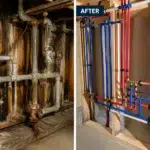
Choosing and installing PEX B fittings is key to building a reliable, code-compliant plumbing system that stands the test of time. Here are the most actionable insights to help Seattle property owners select wisely, ensure durability, and maximize value from every PEX B project.
- Always match PEX B pipe to crimp or clamp fittings—expansion fittings are not compatible, and using the wrong method is the #1 cause of leaks and failed inspections.
- Select material based on location and budget—brass fittings offer superior durability and corrosion resistance, while poly alloy is cost-effective and non-corrosive for most interior uses.
- Verify local code compliance and certifications—Seattle and Washington codes require ASTM F1807 or F2159 listed fittings and visible manufacturer labeling at every joint.
- Use trusted brands and new fittings every time—top brands like Uponor, SharkBite, and Apollo deliver 25-year warranties; never reuse removed fittings for safe, warrantied installations.
- Prep and install with precision for leak-free results—clean, square pipe cuts, correct ring placement, and a Go/No-Go gauge check for every connection prevent costly callbacks.
- Include shut-off valves and versatile adapters—smart placement of shut-offs and transition fittings makes future repairs and upgrades faster, safer, and less disruptive.
- Rely on expert support for big projects—complex or multi-floor repipes benefit from certified specialist installation, securing your warranty and ensuring full code approval.
- Schedule annual visual inspections—spotting drips, corrosion, or pressure drops early can save thousands in repairs; Express Repiping offers free quote and inspection reminders for peace of mind.
These quick points arm you with the essentials—read the full article for step-by-step guidance and insider tips on building a lasting, trouble-free PEX B system in Seattle.
Introduction
Imagine discovering a small leak behind your wall—only to learn it started with a single, overlooked fitting.
That’s a scenario thousands of Seattle homeowners face every year, and it’s no surprise: over 60% of repiping issues come down to using the wrong type or material for PEX B fittings.
With water quality, property value, and peace of mind on the line, every connection counts.
Even a flawless pipe install can fail if a single joint isn’t code-compliant or strong enough for Seattle’s fluctuating water pressure.
So how do you make the right call every time—without becoming a plumbing expert yourself?
It starts by understanding the strengths and trade-offs between:
- Brass vs. poly alloy materials for maximum durability and savings
- Choosing the safest fitting type for guaranteed leak-free performance
- Recognizing which options are approved under the complicated patchwork of Seattle and Washington plumbing codes
A certified, correctly installed PEX B system can last 40-50 years—but only if you pair quality pipe with fittings matched to your property, your water, and your inspection checklist.
Here, you’ll learn how to:
- Select reliable fittings for any home or commercial project
- Avoid common mistakes that cause leaks and failed inspections
- Use the right tools, materials, and installation techniques for rapid, stress-free results
- Protect your investment with expert tips, local code insights, and warranty information
Whether you’re battling rusty pipes, thinking about a renovation, or just want to raise your property’s value, you’re in the right place for clear guidance and step-by-step confidence.
Let’s uncover what makes the right PEX B fitting truly matter for Seattle-area plumbing—and why your next connection might be the most important one in your home.
Understanding PEX B Fittings: Materials, Types, and Compatibility
Choosing the right PEX B fittings is just as important as selecting the pipe itself—your joints are only as strong as the fittings that hold them.
When you’re working with PEX B pipe, remember: fitting style determines how secure, durable, and code-compliant your system will be.
What Sets PEX B Connections Apart
- PEX B pipes are best paired with crimp or clamp fittings—not expansion fittings.
- Expansion fittings (made for PEX A) won’t work correctly with PEX B, since PEX B doesn’t have the flexibility needed for the expansion tool method.
- Crimp rings and clamps secure the connection using 360-degree pressure, making the pipes immediately watertight.
Picture this: You’re repiping a Seattle home. Choosing the wrong fitting style can lead to leaks, inspection failures, and code violations. That’s why it pays to double-check compatibility before installation.
Fitting Materials: Brass vs. Poly Alloy
Both brass and poly alloy fittings are approved for PEX B systems, each with specific strengths:
- Brass fittings: Superior durability, corrosion-resistant, available in certified lead-free options (important for drinking water lines).
- Poly alloy fittings: More affordable, fully non-corrosive, typically color-coded for easy identification in complex installations.
Big stat: Over 60% of Seattle-area PEX repiping projects use a mix of brass and poly alloy to balance cost and longevity.
Fitting Types and Compatibility
- Most crimp and clamp style fittings work with both PEX A and PEX B pipe.
- Expansion-style fittings should not be used with PEX B; stick to manufacturer-approved crimp or clamp solutions.
- Always check packaging: Some brands recommend only using their fittings with their PEX for warranty compliance.
Common Fitting Shapes to Know
You’ll encounter multiple fitting types during installation:
- Elbows: Change pipe direction (perfect for corners)
- Tees: Create branches in the piping
- Couplings: Connect straight pipe sections
- Adapters: Transition between PEX and other materials (like copper)
- Valves and specialty fittings: Offer shut-off or specialized control
Pro tip: Having a kit with assorted elbows, tees, and couplings on hand can turn a repair from stressful into seamless.
Knowledge That Pays Off
Bottom line: Matching the right PEX B fitting to your system means fewer leaks, faster inspections, and a truly reliable result. Choosing certified brass or poly alloy fittings, and sticking to the correct crimp or clamp method, gives you confidence—and peace of mind—that your plumbing will last for decades.
Criteria for Selecting Reliable PEX B Fittings
Project Evaluation and Planning
Start with your project’s scope—are you repiping a full residential home or a section of a commercial property? The type and volume of fittings needed will differ significantly.
For accurate planning, ensure:
- Matching pipe and fitting sizes for a watertight seal (e.g., 1/2″, 3/4″, 1″ common residential diameters)
- Understanding of pressure and temperature ratings listed by manufacturers, as Seattle’s water pressure can fluctuate based on neighborhood
- Water quality factors: If your area in Washington has high mineral content or unusual water chemistry, choose fittings rated for such environments
Code compliance matters. Seattle and Washington plumbing codes specify which PEX B materials, fittings, and installation methods are approved.
When in doubt, ask your supplier or Express Repiping for a code-compatible parts list—they handle these requirements every day.
“A project is only as strong as its smallest fitting. Every connection matters.”
Material and Brand Selection
PEX B fittings come primarily in:
- Brass: Highly durable, corrosion-resistant, available in lead-free options
- Poly alloy (polymer): More cost-effective, naturally non-corrosive, often color-coded for quick identification
Consider each material’s strengths:
- Brass works well in both residential and commercial environments, especially when longevity is the priority
- Poly alloy reduces costs, is lightweight, and performs reliably for most interior plumbing projects
Recognized brands in Seattle include:
- Uponor
- Sioux Chief
- SharkBite
- Apollo
Work with local suppliers—they know which brands pass inspection, which are preferred by local inspectors, and which most plumbers trust.
“The right brand and material mean less worry, fewer callbacks, and easier inspections.”
Cost and Warranty Considerations
Balance upfront costs with long-term value:
- Brass fittings typically cost 10-30% more than poly alloy but offer renowned durability
- Trusted brand fittings generally range from $1–$4 each, depending on material and size
- Poly alloy brings that cost down, especially for larger multi-connection projects
Warranties are your peace of mind. Look for products backed by at least a 25-year manufacturer’s warranty—Express Repiping exclusively uses fittings with robust guarantees.
Consider the total system: A few extra dollars per fitting can save thousands on repairs later.
Picture this: Your entire re-pipe finished on budget, with each fitting guaranteed for decades—a smooth-running system under your floors, out of sight and out of mind.
Careful selection of material, brand, and warranty isn’t just a box to check. It’s your assurance of reliable, code-compliant plumbing that protects your property and investment for years to come.
Step-by-Step Guide to Installing PEX B Fittings
Preparation and Tools
Before starting any PEX B install, gather your essential tools:
- PEX pipe cutter for square, clean cuts
- Crimp tool and clamp tool (specific to your chosen ring or clamp method)
- Go/No-Go gauge to check joint success
- Approved PEX B fittings, rings, or clamps
Double-check that your fittings match PEX B pipe and local code requirements—details that prevent leaks and failed inspections.
Always cut your PEX pipe at a perfectly perpendicular 90° angle.
Remove all burrs or shavings from the pipe end to avoid damaging rings or compromising the seal.
Picture this: a clean, smooth pipe end sets the foundation for a watertight connection every time.
Making the Connection
Follow these key steps for a secure, leak-proof joint:
- Slide the crimp ring or clamp over the PEX pipe—position it about 2″ from the cut end initially.
- Insert the fitting fully into the pipe, pushing until the pipe rests flush against the shoulder of the fitting.
- Slide the ring/clamp back towards the pipe end, centering it 1/8″ to 1/4″ from the end—it should sit squarely over the ribs of the fitting.
- Compress the ring or clamp with the appropriate tool. Apply steady pressure until the cycle is complete, ensuring uniform 360-degree pressure.
Rushing or skipping these steps is the #1 cause of leaks—careful placement and full insertion matter.
Post-Connection Inspection
Now, grab your Go/No-Go gauge:
- Test the joint at each connection point; the gauge should slip easily over the crimped ring or clamp.
- A properly installed connection feels snug, shows a uniformly compressed ring, and leaves no more than 1/16″ separation between the ring and fitting shoulder.
If your fitting fails the gauge test, cut out and replace it immediately—never risk a leak behind your walls.
PEX B joints are full strength from the moment you finish; you can pressurize the system right away with total confidence.
Troubleshooting Common Issues
Leaks commonly trace back to:
- Mis-crimps caused by tool error or uneven pressure
- Rings or clamps placed too far/close to the pipe end
- Using the wrong fitting or tool for PEX B
If you spot a drip or a failed inspection:
- Re-cut the pipe, replace the fitting and ring, and repeat the correct process
- If the problem persists or pipes are hard to access, call a certified repiping specialist—especially for full house repipes or commercial systems
A professionally installed PEX B joint should look clean, test tight, and stand up to immediate use.
A secure PEX B fitting always starts with the right prep, the right tools, and a minute of care per connection—the difference between peace of mind and costly water damage. For instant help, remember Seattle’s Express Repiping is just a call away for inspection or repairs, bringing over a decade of expertise to your piping project.
Ensuring Code Compliance and Long-Term Reliability
Local Code Requirements for PEX B in Seattle
Installing PEX B fittings in Seattle and across Washington state means following strict local plumbing codes designed to protect your property and water quality.
As of 2024, PEX B can be used for both residential and commercial water supply lines but not all applications are approved:
- PEX B is permitted for most potable water piping, but check Seattle and Washington state amendments for restrictions on certain hot water recirculation or fire suppression systems.
- All PEX pipe and fittings must be listed to ASTM F1807 or F2159, and be labeled accordingly.
- You’ll need permits for any repiping project, even for a single bathroom remodel or kitchen upgrade.
- Seattle inspections focus on visible connections, secure support, and manufacturer marks—if fittings or pipe lack proper labeling, expect delays or rework.
The most common code mistakes include:
- Using expansion-type fittings designed for PEX A with PEX B pipe
- Skipping permits or failing to schedule required inspections
- Inadequate support for long PEX runs (building code requires support every 32″ horizontally)
A properly planned repipe avoids failed inspections and costly corrections.
—
Durability and Maintenance of PEX B Fitting Systems
Properly installed, PEX B fittings can last 40-50 years—but only if you avoid the most common pitfalls.
Key steps to protect your PEX system from leaks or damage:
- Insulate exposed pipes in cold zones and crawlspaces to prevent freezing and cracks.
- Secure every joint and fitting with code-compliant clamps and brackets.
- Use only certified PEX B fittings and approved tools to maintain your warranty and avoid early breakdowns.
Express Repiping backs every full house repipe with a 25-year workmanship warranty. Combined with manufacturer guarantees, this means you’re covered against material failure, improper installation, or code disputes for decades.
—
Building for the Long Haul: Smart Maintenance
Seattle’s water can vary in hardness and chemical content depending on neighborhood—annual visual inspections will catch signs of mineral buildup or unusual wear.
If you spot drip marks, corrosion, or unexplained pressure drops, call a specialist for evaluation. Even a small leak, left unchecked, can lead to structural damage.
Visualize this: a well-labeled, neatly secured PEX B system, every fitting gleaming, backed up by documentation and free inspection reminders—peace of mind that lasts decades.
—
Staying code-compliant and investing in regular checks is the surest way to ensure your PEX B fitting project stands the test of time. With thorough documentation, local permit compliance, and Seattle’s strongest warranty protection, you’ll know your home’s water system is reliable, safe, and built for the future.
Advanced Tips for Successful PEX B Fitting Projects
Maximizing Versatility and Performance
Mixing materials and planning for flexibility can make your system future-proof. For Seattle-area plumbing, it’s common to blend brass and poly alloy fittings—brass for extra durability at high-stress points, poly for non-corrosive reliability in basic runs.
Add extra value by including:
- Shut-off valves at key fixture points—making future maintenance safe and hassle-free
- Transition fittings to connect PEX B to copper, CPVC, or threaded lines—useful for renovations or old homes
- Room for expansion and contraction by using expansion loops or slack bends; this prevents strain from Seattle’s temperature swings
“Picture this: a burst valve replaced in minutes—not hours—thanks to smart shut-off placement.”
Tools, Accessories, and Best Practices
Quality tools make all the difference, even for DIY jobs. A pro-level PEX cutter and crimp tool translate into fewer leaks and faster installs.
For best performance and inspection readiness, always:
- Label each run with durable pipe markers, especially on multi-story projects
- Use support brackets every 32″ horizontally and sleeves through wall penetrations—prevents sagging and pipe abrasion
- Store unused fittings in clean, dry bins and keep tools wiped-down to avoid contamination
- Inspect all connections with a Go/No-Go gauge—this quick check is a Seattle inspector’s best friend
“Trust your tools and your tags—someday, that label could save you hours tracking a water line.”
Professional Support and Value of Certified Installation
DIY is possible, but certified installation guarantees peace of mind, especially with Seattle’s strict building codes and permitting.
Consider calling in the experts if:
- Your project spans multiple floors or involves old, unknown plumbing
- You want to protect your warranty—for example, Express Repiping’s 25-year guarantee requires certified installation
- You’re aiming for fast, reliable completion with full code compliance and detailed inspection paperwork
“Express Repiping tackles both emergencies and full house repipes—saving the day with quick response, ironclad warranties, and transparent quotes.”
When advanced planning meets precision installation and pro support, your PEX B system delivers reliable value for decades. The smartest projects combine flexible planning, professional tools, and certified expertise—remove the guesswork and keep your property protected.
Frequently Asked Questions about PEX B Fittings
Are PEX B Fittings Safe for Drinking Water?
PEX B fittings are certified as safe for potable water when purchased from reputable brands meeting NSF and ASTM standards.
- Look for lead-free brass or certified poly alloy fittings; both are approved for residential and commercial plumbing in Washington state.
- Seattle’s strict plumbing codes require using fittings and pipes listed for drinking water—Express Repiping only installs products that meet local and national safety requirements.
“Seattle’s homeowners trust certified PEX B fittings to deliver clean, safe water every day.”
Troubleshooting a Leaking PEX B Connection
Leaking joints most often result from incorrect crimping or poor pipe cuts.
- Use a go/no-go gauge to check all connections—if the ring or clamp doesn’t pass, cut out the joint and redo it.
- Common errors include rings not fully compressed, crimp positioned too far from the end, or using the wrong size tool.
- For persistent problems, always verify you’re using PEX B-specific fittings and rings, not mixing in PEX A expansion parts.
“A go/no-go gauge is your best friend: if in doubt, check before you pressurize!”
Can PEX B Fittings Be Reused?
Industry best practice is to never reuse a PEX B fitting after removal.
- Fitting or pipe deformation and leftover crimp marks create a higher risk of failure or leaks.
- Brass and poly alloy fittings may appear undamaged but lose their certified seal after installation.
For peace of mind and warranty protection, always use new fittings and rings for every joint.
Crimp vs. Clamp Fittings: Reliability at a Glance
Both crimp and clamp connections are considered reliable if installed correctly.
- Crimp rings (copper) are the most widely used for PEX B—longstanding track record, slightly easier to visually inspect.
- Stainless steel clamps offer quick installation, especially in tight spots, but demand exact tool alignment for leak-free results.
“Either method will outperform old metal pipes—choose based on your tools and comfort.”
Comparing Brand Warranties and Material Guarantees
Warranties vary, but top U.S. brands back PEX B fittings for up to 25 years when installed to manufacturer specs.
- Brass fittings typically carry the longest warranties, but poly alloy brands now offer similar coverage with code-compliant certifications.
- Express Repiping protects every installation with a full written warranty for long-term security—one less thing to worry about with your pipes.
You’re empowered to choose the safest, most reliable fittings for your Seattle property—just remember to confirm certifications, never skip inspection, and always use new fittings for every repair or repipe.
Conclusion
When you choose the right PEX B fittings and master proper installation, you’re not just repairing pipes — you’re protecting your investment, your property, and your peace of mind for decades to come.
Every joint you create today builds a foundation of reliability for the future. In Seattle’s challenging climate, sound fittings and code-compliant workmanship are what keep water flowing safely and efficiently, year after year.
—
Make your project a lasting success by:
- Always using manufacturer-approved crimp or clamp fittings for PEX B—not expansion types
- Selecting brass or poly alloy based on your project’s needs, prioritizing durability and local water chemistry
- Double-checking code compliance and securing permits before work begins
- Inspecting every joint with a go/no-go gauge to catch small mistakes before they become costly problems
- Choosing certified installation or expert review for large or complex jobs—locking in warranty protection and inspection peace of mind
—
Ready to take action?
- Assess your project scope and purchase only certified, code-compliant fittings
- Gather pro tools and familiarize yourself with installation steps
- Schedule a free inspection or get a quote from a licensed Seattle repiping specialist, like Express Repiping, if you want guaranteed results
- Prioritize routine inspections and prompt repairs—today’s small fix is tomorrow’s big savings