
8 Warning Signs Your Seattle Home Needs Repiping
The signs you need repiping in Seattle homes are often hiding in plain sight — brown tap water, recurring leaks, or a water bill that keeps climbing for no clear reason.
Nearly 40% of Seattle homes over 40 years old are already showing these red flags. If your plumbing is sending warning signals, acting early with a certified specialist can save you thousands and protect your property for decades.
Here’s what this guide covers:
- The top warning signs your pipes need replacing — not just patching
- Which outdated pipe materials put Seattle homes at highest risk
- The real cost of delaying repiping (and why it compounds fast)
- How whole-home repiping protects your property value and health
- What to expect from a free, no-obligation inspection with Express Repiping
Seeing more than one of these signs? Schedule your free Seattle repiping inspection →nd reliability every Seattle homeowner deserves—dive into the full article to learn how Express Repiping can make your plumbing worry-free!
IIs Your Seattle Plumbing Sending You Warning Signs?
Picture turning on the tap and being greeted by water that’s brown, tastes metallic, or barely dribbles out—an unsettling experience, yet one that’s all too familiar for thousands of Seattle property owners each year.
If you’ve noticed rising water bills, recurring leaks in different parts of your home, or that telltale rattle and clang from your plumbing, you’re not alone—nearly 40% of Seattle homes over 40 years old face these red flags long before disaster strikes.
The good news? Repiping is more than a fix—it’s a smart upgrade that protects your home, health, and wallet for decades. Instead of patching another pipe or guessing if aging materials are safe, you’ll know exactly what’s in your walls… and enjoy crystal-clear water with reliable pressure, every day.
Curious if your plumbing is waving warning signs? Here’s what you’ll discover:
- Key symptoms that mean more than just another leak—like discolored water, persistent low pressure, or strange plumbing noises
- The real cost of waiting—from hidden water damage to higher insurance bills and lost home value
- How to spot outdated pipes and what a trustworthy, warranty-backed repipe delivers for your Seattle property
As a family-owned team with certified pros and a 25-year guarantee, we’ve helped hundreds of local homeowners end the leak-repair cycle—often saving thousands by acting before small problems cascade into emergencies.
Knowledge is peace of mind. The sooner you recognize your property’s warning signs, the sooner you can take control—with free inspections, transparent pricing, and expert support every step of the way.
Ready to see what’s really behind your plumbing woes—and how easy a fresh start can be?
Let’s break down what repiping means for your home, your investment, and your daily peace of mind.
What Is Repiping — And When Does Your Seattle Home Need It?
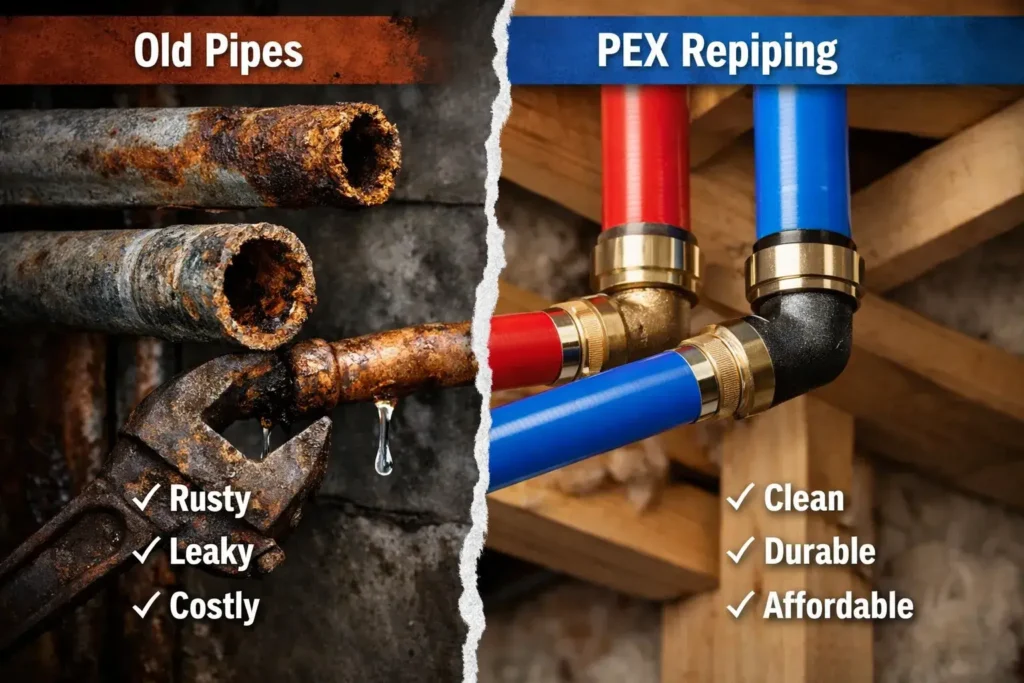
Repiping means replacing all or most of your property’s existing water pipes—not just patching a single broken section.
It’s a solution for entire systems that are aging, corroded, or built with outdated, high-risk materials. Lead pipes pose serious health risks — in fact, EPA’s guidelines on lead in drinking water confirm there is no safe level of lead exposure, making immediate replacement essential.
When a Seattle home or commercial building starts showing recurring leaks, discolored water, or pressure drops, it’s often a sign that the whole plumbing system is reaching the end of its lifespan—and standard repairs are only a temporary fix.
Express Repiping offers residential and commercial repiping services in Seattle using premium PEX and copper — completed in as little as one day with full wall patching included.
What Makes Repiping Necessary?
Many homes in the Seattle area still have galvanized steel, polybutylene, or even lead piping—materials known for corrosion, splitting, or serious health risks.
Repiping becomes necessary when:
- Leaks appear in multiple areas (not just once or twice)
- Water is brown, yellow, or rusty
- System-wide pressure is low or fluctuating
- Pipes are visibly corroded or stained
- Your plumbing is 40+ years old
If your property matches any of the above, it may be time for a proactive system upgrade.

The Benefits of Whole-Home Repiping
Choosing to repipe offers more than just a stopgap—it’s an investment in your property’s safety, value, and comfort.
Customers who choose Express Repiping enjoy:
- Reliable, consistent water pressure
- Clean, safe, great-tasting water
- Long-term savings versus constant repairs
- Increased property value and marketability
“Peace of mind comes standard with new pipes and a 25-year warranty.”
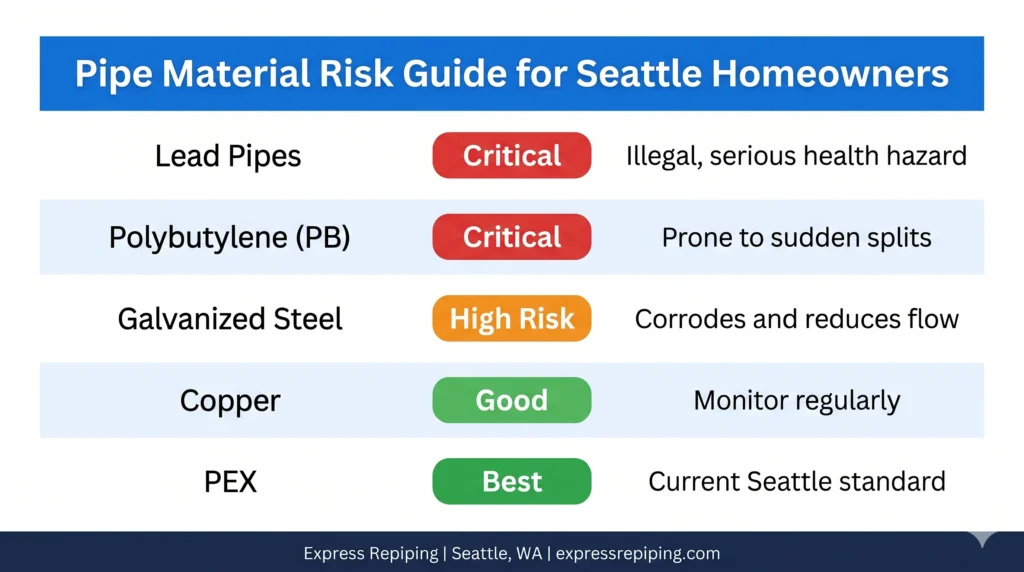
Pipe Lifespan by Material: What Seattle Homeowners Should Know
Every material has a lifespan—knowing what’s in your property matters:
| Pipe Material | Expected Lifespan | Key Risk | Seattle Status |
|---|---|---|---|
| Galvanized Steel | 40–60 years | Rust, reduced flow, internal corrosion | ⚠️ High Risk — Replacement Recommended |
| Polybutylene (PB) | 20–30 years | Sudden splits, reacts to city water chemicals | 🔴 Critical — Replace Immediately |
| Lead | Varies | Serious health hazard, now illegal | 🔴 Critical — Replace Immediately |
| Copper | 50–70 years | Can corrode in acidic conditions | ✅ Good — Monitor Regularly |
| PEX | 50+ years | Minimal — flexible and corrosion-resistant | ✅ Best — Current Seattle Standard |
⚠️ Unsure what pipes you have? Schedule a free inspection with Express Repiping — we identify pipe materials at no cost.
“A home with 50-year-old galvanized pipes is a ticking time bomb for leaks and water quality issues.”
Why Proactive Repiping Saves Seattle Homeowners Thousands
Think of repiping as an upgrade that protects you from water damage, rising bills, and insurance headaches—not just a last resort after a major flood.
Picture this: Instead of waking up to a surprise ceiling leak or a massive water bill, you enjoy stress-free plumbing for decades—knowing your pipes are built to last.
Repiping brings reliability, property protection, and true peace of mind.
Spotting the signs and acting early lets you prevent emergencies—making this one of the smartest investments for any Seattle property owner.
Top Signs Your Plumbing Needs Repiping
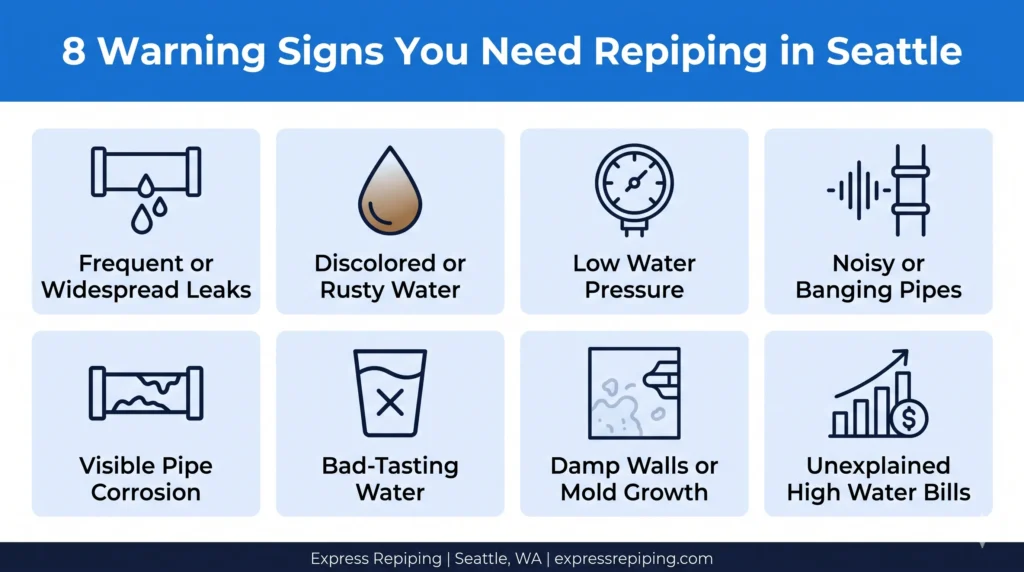
Frequent or Widespread Leaks: A Major Repiping Warning Sign
Seeing multiple plumbing leaks—especially in different areas of your home—signals system-wide failure, not just single bad joints.
Look out for these patterns:
- Recurring pinhole leaks in pipes
- Water appearing under sinks or behind walls
- Leaks in slabs, ceilings, or multiple rooms
If you’re calling a plumber often or patching up the same problems, you’re likely dealing with pipes deteriorating throughout the house—not an isolated “one-off” repair.
Seattle homeowners report up to three separate leaks in just six months before choosing a full repipe. One customer described a frustrating year of repairs: “Fix one leak, and a new one pops up next week.” This is a classic sign it’s time to stop repairing and start replacing.
“Continuing to fix the same old pipes is just a temporary bandage,” says our licensed specialist.
Discolored or Rusty Water: What Your Seattle Pipes Are Telling You
Brown, yellow, or reddish water is never a good sign.
This discoloration typically means:
- Rust and corrosion from old galvanized or iron pipes
- Tea-colored water, especially after pipes sit unused
Homeowners often notice unpleasant taste and worry about what’s in their water. Any sudden color change—especially with a metallic or sulfur smell—means you should book a professional inspection right away.
Almost 25% of pre-1980 Seattle homes experience visible water discoloration by age 45.
Low or Fluctuating Water Pressure
If water flows weakly from multiple faucets or showers, or pressure surges and drops unexpectedly, you might have deeper pipe trouble.
Common reasons include:
- Mineral buildup and internal corrosion narrowing pipe interiors
- Hidden leaks or obstructions
Certified plumbers use pressure checks at several fixtures to confirm if the whole-home system is failing rather than just a faucet.
One Seattle business owner reported losing 45% flow in their restrooms before learning their 1960s pipes were almost fully blocked.
Noisy or Banging Pipes
Do you hear banging, clanging, or rattling every time the water runs?
These noises can mean:
- Unstable, corroded, or loose old pipes
- Dangerous water hammer from internal damage
Ignoring these symptoms risks bigger problems like leaks inside the walls or ceiling. Pros use audio tracking and thermal cameras to find the noise source before recommending the right fix.
Visible Corrosion or Damage on Exposed Pipes
Spot these warning signs under sinks or in basements:
- Rust flakes, bubbling, or flaking
- White crusty deposits, blue or green stains on copper
- Spots of moisture or watermarks along pipes
Visible corrosion is often just the tip of the iceberg; pipes at this stage are near failure and must be examined quickly to prevent water damage.
“We caught a pinhole before it burst—but the pipe was already wafer thin,” reported one local homeowner.
Bad-Tasting or Foul-Smelling Water
Metallic or rotten-egg-scented water shouldn’t be ignored.
These odors/tastes may signal:
- Interior pipe decay
- Sediment and biological buildup
Filtration devices rarely resolve these issues if the underlying pipes are deteriorating. Express Repiping customers often rave, “New pipes brought back the taste of clean water overnight.”
Water Stains, Damp Walls/Ceilings, or Mold Growth
Picture this: Water stains down a hallway ceiling, musty smells, or soft drywall when you press near the baseboards.
These are classic signs of hidden leaks:
- Stains and warped floors—especially in multiple locations
- Unexplained mold or mildew patches
Moisture meters and thermal imaging quickly reveal leak patterns invisible to the naked eye.
Rising or Unexplained Water Bills
A sudden jump in your water bill—with no change in usage—often equals hidden leaks or pipe failures.
Even a single drip wastes over 3,000 gallons per year. In Seattle, unnoticed pipe leaks collectively cost millions in extra utility costs annually.
Tracking your bills month-to-month is the fastest way to spot invisible plumbing troubles.
Outdated Pipe Materials That Signal It’s Time to Repipe
Still have these pipes?
- Galvanized steel: Frequent corrosion, narrowings, rust risk
- Polybutylene (PB): Known to rupture and react badly to city water treatments
- Lead: Now illegal due to severe health risks
If you’re unsure, ask a licensed specialist to inspect. Local codes now recommend proactive replacement for these materials, reducing both health and property risks.
How Old Are Your Pipes? Plumbing Lifespan Guide for Seattle Homes
Expect these service lives:
- Galvanized steel: 40–50 years
- Iron: Up to 50 years
- PB: 20–25 years
- Copper: 50+ years
- PEX: 50+ years
If your Seattle home is more than 40 years old with original plumbing, combine age with any of the above symptoms and it’s time for a proactive inspection.
—
When you spot more than one of these red flags—or keep fixing leaks that keep coming back—it’s a strong sign your pipes are overdue for expert attention. Proactive repiping restores peace of mind, saves money in emergencies, and protects your property’s value for years to come.
Repair vs. Whole-Home Repiping: How To Decide
When Repairs Are No Longer Enough
Not sure if another leak means a quick fix or a sign of bigger trouble ahead? If repairs start feeling like “Band-Aids”—offering relief that only lasts a few months—full repiping could be your best investment.
If you spot any of these patterns, you’re not just unlucky—you’re seeing the classic “point of no return”:
| Situation | Repair | Repipe |
|---|---|---|
| Single isolated leak | ✅ Appropriate | Not necessary |
| Leaks in multiple rooms or floors | Temporary fix only | ✅ Recommended |
| Discolored or rusty water | Does not resolve root cause | ✅ Recommended |
| Galvanized, PB, or lead pipes | Not advised | ✅ Required |
| Home built before 1980 | Inspect first | ✅ Likely needed |
| Pressure drops across whole home | Masks the problem | ✅ Recommended |
Not sure which applies to your home? Book a free assessment — Express Repiping provides honest, no-pressure recommendations.
The math is simple: Frequent repair bills add up fast—often surpassing the cost of a single, comprehensive repipe within just 2-3 years.
“If plumbing calls are becoming part of your routine, it’s time to rethink the patchwork approach.”
How Pros Decide When Full Repiping Is the Right Call
How do the pros know it’s time? Expert repipe recommendations are usually made when you see:
- System-wide issues: Problems show up at several sinks, showers, or floors
- Widespread stains or damp areas keep returning, even after fixes
- Your home has galvanized steel, polybutylene (PB), or lead pipes—all known for premature failure
- The house was built before 1980, or records show plumbing over 40+ years old
Seattle codes and national standards often prioritize repiping if problematic materials are present—especially if combined with symptom clusters.
Picture this: A 1965 Seattle rambler where pinhole leaks keep popping in walls—despite three repairs in six months. That’s your cue for a whole-house repipe.
What To Expect From a Professional Repipe Assessment
A top-rated repiping company doesn’t leave you guessing. Inspection steps should include:
- Visual review of exposed pipes (checking for rust, staining, or corrosion)
- Pressure testing at your main and at trouble spots
- Water quality analysis—testing for metals, clarity, and contaminants
- Use of cameras or moisture meters to spot hidden leaks
- A checklist for you:
- Home age
- Any remodel record
- Where you’ve observed symptoms—be specific!
Express Repiping specializes in full transparency and honest assessment—with written estimates, free second opinions, and clear explanations of every finding. nCurious about the full process? Read our detailed guide on what to expect during a whole-home repipe — from initial inspection through final walkthrough.

“A true specialist makes the problem—and the solution—easy to see, not a guessing game.”
When repairs are getting repetitive and symptoms show up across your property, a professional assessment can confirm if whole-home repiping is the smarter, money-saving move. Count on honest pros who prioritize clear information, so you feel confident every step of the way.
The Risks of Delaying Repiping: Real Costs & Consequences
The Real Cost of Waiting: Financial and Health Risks of Aging Pipes
Putting off repiping doesn’t just mean “one more leak”—it can multiply your risks and your costs.
Every year, minor plumbing leaks account for over $10 billion in property damage in the U.S., according to insurance industry data. In older Seattle homes, these issues can add up fast—sometimes silent for months before surfacing as soaked drywall, mold growth, or warped floors.
If you’re seeing early warning signs, the smartest move is to book a free repiping assessment now — before a minor issue becomes a major emergency.
Consider these escalating costs from delayed action:
| Delay Consequence | Typical Cost | Risk Level |
|---|---|---|
| Repeated patch repairs | $500–$2,000/year | 🟡 Medium |
| Water damage restoration | $1,000–$10,000+ per incident | 🔴 High |
| Higher insurance premiums | Varies — coverage may be denied | 🔴 High |
| Home resale complications | Thousands lost in negotiations | 🔴 High |
| Mold remediation | $2,000–$6,000+ | 🔴 High |
A whole-home repipe with Express Repiping typically costs less than 2–3 years of repeat repairs — and comes with a 25-year workmanship warranty.
- Repeated repairs: Each call to fix another leak or replace a section of old pipe adds up—homeowners often spend thousands on “Band-Aid” solutions that never address the real issue.
- Water damage restoration: Cleanup from even a small leak costs $1,000–$3,000 per incident. Major pipe bursts or hidden leaks behind walls can easily lead to $10,000+ in repairs.
- Higher insurance premiums: Many Seattle-area policies will increase your rates or restrict coverage after multiple claims for plumbing failures. Some exclude damage due to old, corroded, or outdated pipes.
- Home resale headaches: Lenders flag failing pipes as a liability. Inspection reports noting active leaks or old material can result in lost sales or last-minute negotiations costing sellers thousands.
Structural and Health Dangers You Can’t See
Delaying repiping can mean more than just expensive plumbing bills—there are long-term threats to your health and your property.
- Undetected leaks promote mold, mildew, and wood rot, leading to musty odors, sagging floors, and compromised building structures.
- Pipes containing lead or old, deteriorating material introduce serious health hazards—especially harmful to children and pregnant women.
- Bacterial contamination is a growing risk in pipes that have lost their protective lining or suffer from hidden leaks.
“Failing pipes aren’t just a nuisance—they’re an unseen risk factor for every room and every resident.” Deteriorating pipes don’t just leak — they introduce contaminants directly into your water supply. CDC’s guidance on tap water contamination from aging pipes confirms that cracked or corroded infrastructure significantly increases contamination risk.
“Picture this: A simple leak in a wall. A few weeks later, you’re dealing with soaked insulation, warped studs, and the unmistakable smell of mold.”
“Your water may look fine today, but hidden corrosion could be turning every glass into a risk you can’t see.”
How Repiping Protects Your Warranty Coverage and Insurance
Most homeowners don’t realize till it’s too late: insurance usually excludes damage from old age or gradual pipe failure.
Take note:
- Insurance companies in Seattle often deny claims when damage is traced back to corroded or obsolete pipes.
- Timely repiping not only protects your property but can improve your ability to secure coverage or even lower premiums.
- With Express Repiping, you receive a 25-year warranty—that’s peace of mind you can’t get from patchwork repairs. Our guarantee covers both residential and commercial repiping projects using premium PEX and copper.
If you’re seeing early signs—like discolored water, rising bills, or recurring leaks—the smartest move is to act now, not after an emergency.
Delaying repiping only raises your risk of unexpected expenses, lasting property damage, and potential health threats. Prioritizing a timely, professional repipe is the surest way to protect your investment and your peace of mind.
Next Steps: Partnering With the Right Repiping Company
Why Licensing and Local Experience Matter
Choosing a licensed repiping specialist protects your wallet and your home.
In Seattle, every reputable contractor carries up-to-date state licensing and liability insurance—essential for code compliance, safety, and warranty coverage.
Local experience also matters: A trusted repiping company understands regional plumbing codes, Seattle’s water chemistry, and which materials perform best in our climate. When choosing who to trust, look for licensed Seattle repipe specialists with verified local experience, transparent quotes, and a long-term workmanship warranty.
“Partnering with the right pro is the single easiest way to safeguard your property value and plumbing investment.”
Must-Ask Questions Before You Sign
When interviewing a repiping company, hone in on what affects your bottom line and peace of mind:
- What’s your licensing and certification?
- Which pipe materials can you install? (PEX, copper, both?)
- How long is your workmanship warranty?
- Will I get a transparent, itemized quote beforehand?
- How long will the project take—and will I have water each night?
- How do you assess my home and explain my options?
- Are all costs, permits, and inspections included in your price?
Ask to see a sample quote or contract—transparency speaks volumes about a company’s integrity.
Why Seattle Homeowners Choose Express Repiping
At Express Repiping, we take pride in:
- Giving every customer an honest, detailed assessment
- Providing free, no-pressure quotes
- Standing behind each project with a 25-year warranty
- Offering family-owned care—no upselling, just what’s needed
- Servicing both residential and commercial properties across Seattle and Washington
Picture this: Our inspectors arrive on time, walk you through visible issues, and answer every question in plain language.
“One call can take the stress and uncertainty out of your plumbing upgrade—starting with a free inspection.” Don’t just take our word for it — read what Seattle homeowners say about Express Repiping and see why we’re the trusted choice across King, Snohomish, and Pierce Counties.
Schedule Your Free Seattle Repiping Inspection Today
Ready to get answers? Here’s how to book your FREE inspection or request a no-obligation quote:
- Call our Seattle office or use the Easy Online Quote Form
- We’ll schedule a walkthrough at your convenience—often within 24–48 hours
- Ask anything, anytime—our team’s ready to help, 7 days a week
Curious about what sets reliable contractors apart? Explore our guide: How to Choose the Best Repiping Company in 2025
By prioritizing licensed expertise, transparent quoting, and local reputation, you ensure your repipe project is smooth, affordable, and stress-free from start to finish.
Take Control of Your Seattle Home’s Plumbing Before It’s Too Late
Recognizing the signs that you need repiping—like rising water bills, rusty water, or frequent leaks—means you’re already one step ahead in protecting your property.
Knowledge is your first line of defense. When you see more than one warning sign, especially across multiple fixtures or rooms, it’s time to think bigger than just another repair.
Quick Home Check: Repiping Warning Signs You Can Spot Today
It’s easy to miss problems when symptoms seem minor. But widespread leaks, low pressure everywhere, or water stains in different areas almost always point to a system-wide issue.
Picture this: You notice warm spots on your floor, damp drywall near the ceiling, and water that tastes metallic every morning. These are more than annoyances—they’re a strong case for a whole‑home repiping assessment.
2-3 key things you can do today:
- Take note if water discoloration, low flow, or pipe noises pop up in more than one area.
- Check your monthly water bill for unexpected increases—sometimes the water meter tells the story before your pipes do.
- Walk your basement, crawlspace, or utility area to inspect for visible corrosion, green/white crusts, or persistent moisture.
Free Inspections and Honest Assessments From Seattle’s Repiping Experts
At Express Repiping, we believe informed customers make the best decisions. That’s why we offer:
- Free, no-obligation inspections for Seattle-area homes and businesses, so you know what you’re dealing with before you pay a dime.
- Clear, honest assessments that explain exactly what’s going on, with no technical jargon—just a straightforward plan for your property.
If you email us photos, describe what you’re seeing, or schedule an on-site check, our family-trained experts will walk you through:
- Pinpointing pipe age and material (galvanized, PB, copper, PEX)
- Identifying the severity and urgency of your symptoms
- Estimating costs, timelines, and what to expect—all before you commit
Take Control Before Small Pipe Problems Become Costly Emergencies
Waiting often multiplies costs: The average undetected leak adds $70–$200 per month to water bills and can cause $5,000+ in hidden damage within weeks if ignored.
Proactive repiping isn’t just a fix—it’s an investment in your property’s value, safety, and your family’s health.
“Trust your instincts—if something feels off, get it checked.”
“A free professional inspection today can save you thousands tomorrow.”
“Your home deserves plumbing that’s as reliable as you are.”
When you act early and choose a certified team with a 25-year warranty, you guarantee decades of clear water and peace of mind—one confident plumbing decision at a time.
Act Now: Protect Your Seattle Home With Expert Repiping
Recognizing the signs of failing plumbing isn’t just about fixing today’s leaks—it’s about protecting your property, your health, and your future comfort.
With every step you take toward proactive repiping, you’re investing in worry-free living and long-term value for your Seattle home.
Here’s what matters most as you move forward:
- Trust your instincts when you notice unusual plumbing symptoms like widespread leaks, rust, or foul-smelling water—these aren’t just annoyances, but critical warning signs.
- Monitor your water usage and bills each month; unexpected spikes are often the first clue to hidden problems behind your walls.
- Visually inspect exposed pipes in basements, crawlspaces, or utility rooms for corrosion, discoloration, or moisture—simple checks reveal a lot.
- Book a free, certified inspection by a local repiping specialist—don’t wait until small annoyances become emergencies.
- Ask about 25-year warranties and transparent quotes to guarantee peace of mind and zero surprises during your project.
To take control right now:
- Call Express Repiping or use our Easy Online Quote Form to schedule your no-obligation assessment—often within 24–48 hours.
- Email us photos or describe your symptoms for quick feedback from our team of trusted experts.
- Start a plumbing “health check”—even one careful walk-through can catch early warning signals before costly damage occurs.
Every home tells a story through its pipes—make yours a story of confidence, safety, and smart investment.
You deserve plumbing that works as hard as you do. Reach out today, and turn uncertainty into reliable comfort—one simple step at a time.
“Smart action beats anxiety—trust a certified team, and enjoy plumbing peace of mind for decades to come.”
FAQs:
What are the signs you need repiping in a Seattle home?
The main signs you need repiping in a Seattle home include recurring leaks in multiple rooms, brown or rusty water, low or fluctuating water pressure, visible pipe corrosion, and unexplained spikes in your water bill. Homes built before 1980 with original galvanized steel or polybutylene pipes are at highest risk and should be inspected proactively.
How do I know if my pipes need replacing or just repairing?
If leaks keep returning in different areas, water is discolored, or pressure drops throughout the whole home, repairs are likely just a temporary fix. A licensed repiping specialist will assess whether the issues are isolated or system-wide — multiple symptoms across different fixtures almost always point to full replacement being the smarter investment.
How long does repiping a Seattle home take?
Most whole-home repiping projects in Seattle are completed in 1–3 days depending on home size and pipe material. Express Repiping ensures water access is restored each evening so your household isn’t disrupted overnight during the project.
How long does repiping a Seattle home take?
Whole-home repiping in Seattle typically ranges from $4,000 to $15,000 depending on home size, pipe material, and accessibility. While the upfront cost may seem significant, it eliminates recurring repair bills that often exceed this amount within 2–3 years — and Express Repiping provides transparent, itemized quotes before any work begins.
Will homeowners insurance cover repiping in Seattle?
Most standard homeowners insurance policies do not cover repiping as a preventative measure, but they may cover water damage caused by sudden pipe failure. Insurers in Seattle often deny claims when damage is linked to gradual corrosion or outdated pipe materials — making proactive repiping the safest way to protect both your property and your coverage.